


The PC industry has made upgrading so expensive that figuring out how to get around limitations is becoming more interesting than the upgrades themselves.
And modders are getting surprisingly good at it.
So much so that they found a way to get DLSS 5 working on Radeon GPUs. The performance still needs serious work, but that alone raises an awkward question: how much of what makes a GPU “obsolete” comes down to what its manufacturer is willing to support? When people are paying this much for hardware, I think they deserve an answer.
DLSS 5 On AMD GPUs
Last week, I discussed my biggest concern with DLSS 5. Specifically, what happens if developers begin designing games around the expectation that neural rendering will provide part of the finished design? Because at that point, turning it off could mean losing visual detail that the game was built to have.
This is obviously something that Nvidia would love. Imagine a world where one GPU manufacturer isn’t just faster or provides better upscaling. But playing a game on their card completely changes the way it looks. Think PhysX times 1,000.
Well, one modder may have just crushed Nvidia’s hope.
It’s called DLSS-NR on AMD, and it brings DLSS 5’s neural rendering to Radeon hardware. Specifically, their RX 9000 and 7000 cards. It currently targets DX12 games with FSR support, but so far, it’s only been tested in a few games.
Now, the interesting part is that this isn’t something like DLSS 5 or anything like that. The developer describes a new runtime written for AMD GPUs, using Nvidia’s DLSS 5 library. So this is the real deal.
With that said, there is one major issue: performance.
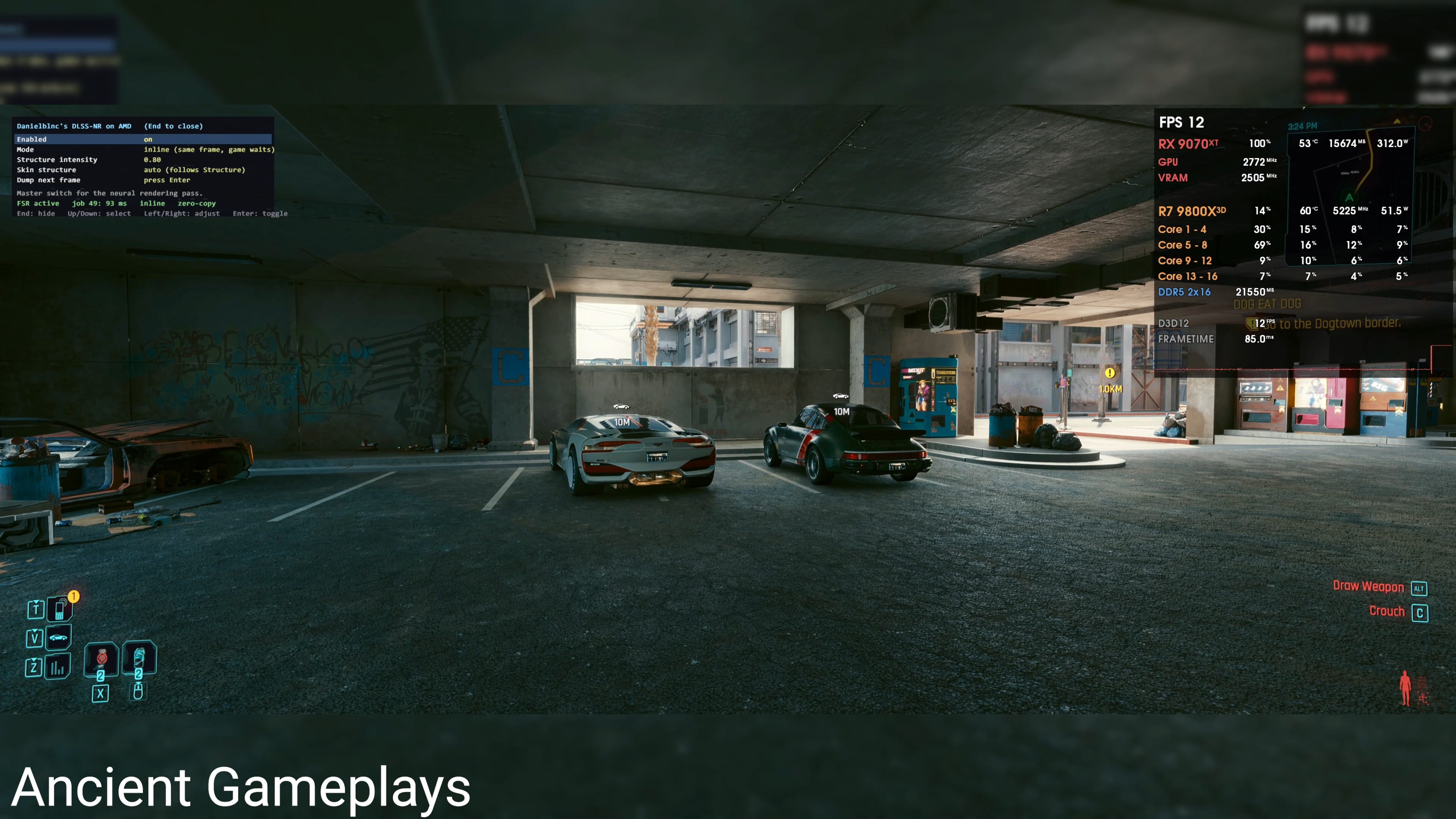
The YouTuber Ancient Gamplay got a chance to test it out, and in Cyberpunk 2077, the RX 9070 XT went from roughly 85 FPS with DLSS 5 turned off to just 11–12 FPS with it enabled. At that point, you have plenty of time to appreciate the improved lighting. Individually. In every frame.
Luckily, there is some good news here.
The developer now reports roughly 33 FPS at 1080p on the 9070 XT, with further optimization underway and a goal of approaching RTX 5070 Ti performance. That’s obviously just a target, so it’s not guaranteed or anything, but even getting close to that framerate would prove that AMD can easily do the same thing. Even so, the fact that this works at all is huge.
Especially if Nvidia can’t find a way to shut it down. Because let’s be honest, if they can, they almost certainly will. This is clearly meant to be the ultimate walled garden, pretty much forcing gamers to go with Nvidia cards. In fact, this could be bigger than anything Apple, Amazon or any other company has tried in the past. Time will tell how it ultimately ends up, but here’s to hoping competition doesn’t get left in the dust.
RTX 40 & 30 GPUs Just Got Multi Frame Gen
Speaking of software limitations that are clearly meant to force customers into buying the latest cards, it always annoyed me that Nvidia’s 40 series GPUs didn’t get support for Multi Frame Generation. Just like their 30 cards didn’t get support for regular Frame Gen. Obviously there are hardware differences, but AMD has proven that a lot of those can be overcome. Though with some drawbacks.
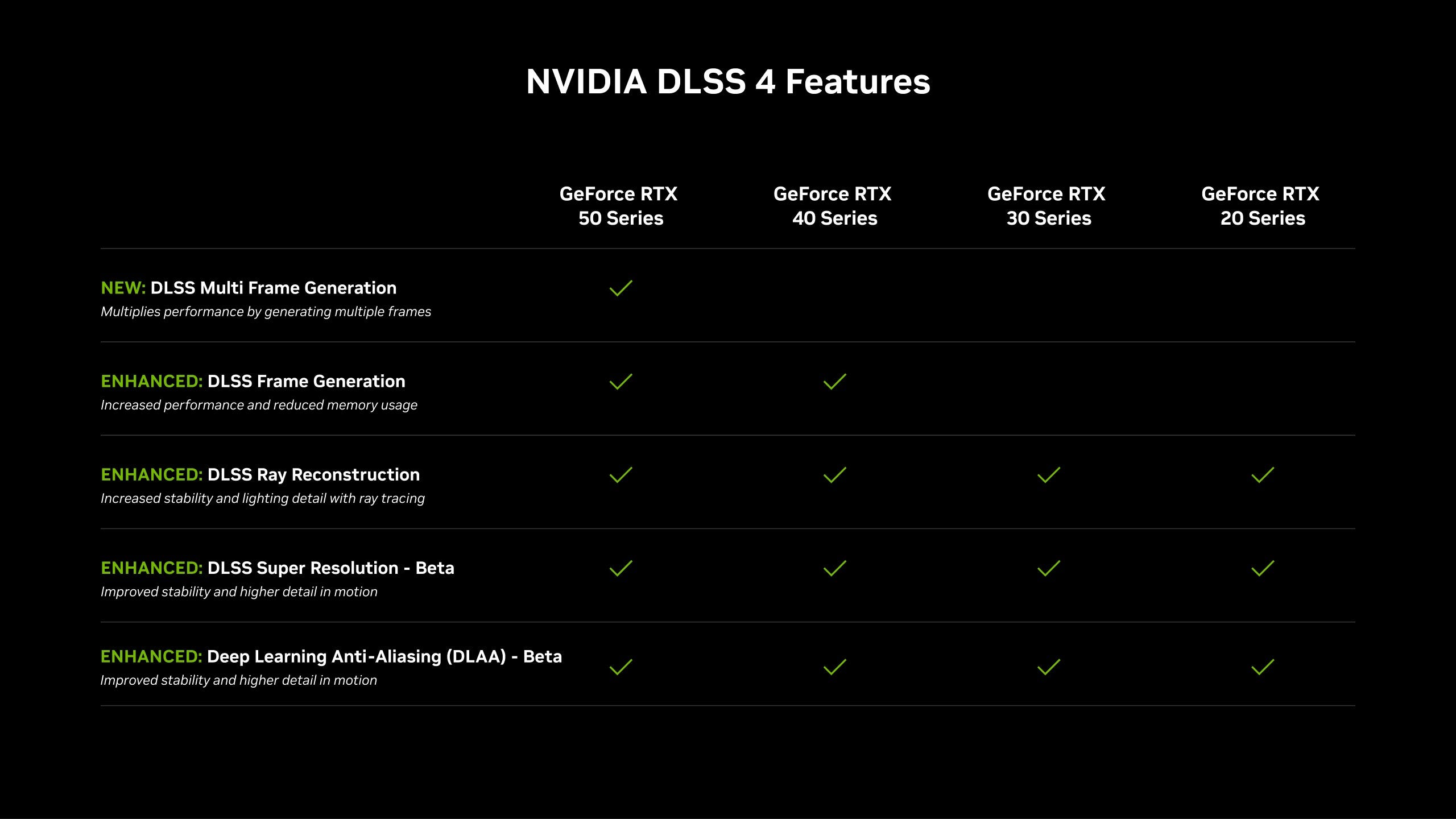
Well, if this isn’t proof that these limitations are nothing but artificial, I don’t know what is. Because modders have now gotten Nvidia’s own Multi Frame Gen working on RTX 40 cards. And I don’t mean some variant of AMD’s FSR or using Lossless Scaling. This actually uses Nvidia’s official DLSS Multi Frame Generation.
This one is called Universal RTXMFG, and it not only works with Multi Frame Gen, but also Dynamic Frame Gen. At least in certain games. They’ve also added experimental RTX 30 support, though it’s extremely early to the point where some games may load the menu, but still not work. Regardless, this is still really awesome to see.
With all of that said, it looks like Nvidia might be trying to shut them down with some new runtimes that they released. Now, I say “might” because obviously, updates can break unofficial mods without the company specifically targeting them, but this does at least point that possibility. The good news is that they’ve already updated the mod to get around it. And the even better news is that the mod itself seems to work really well.
For example, one test compared an RTX 4080 using the mod against an RTX 5070 Ti with regular Multi Frame Gen support, and the results were scary close. Performance gains and latency were both very similar, and while the 50 series card did have slightly better frame pacing, the reviewer said that they couldn’t actually tell the difference while playing the game.
There are even reports of a 4080 going from roughly 38 FPS with normal Frame Gen to around 180 FPS with 6X Multi Frame Gen. Even though the base rendered framerate dropped to around 30 or 31. So there is some overhead, and Blackwell may still handle frame pacing a bit better thanks to its hardware improvements. But the fact that the RTX 40 cards can run Multi Frame Gen this well makes it a lot harder to believe that support was impossible. Instead, it looks more like Nvidia drew an artificial line in the sand to make their new cards seem more necessary.
Dual GPUs Could Actually Come Back
Believe it or not, dual GPU gaming could be making a comeback! Yeah, I never thought a phrase like that would be coming from my mouth. Or fingers.
If you were around for SLI or CrossFire, you probably remember both the excitement… And subsequent disappointment. Mostly because support for the tech had to be programmed into the game, so it made performance hit or miss. Sometimes a second card gave you a huge FPS improvement. Other times, you spent a bunch of money to discover that your favorite game didn’t particularly care. The tech was also plagued with frequent glitches, weird scaling when going from two to four GPUs, visual artifacts, and just too many annoyances to make it worth doing. Hence why the tech didn’t last.
Luckily, this new approach is completely different. For one, it’s made to offload a specific task onto the new GPU. And second, it’s specifically for DLSS 5 instead of general gaming.
It’s a new mod called Neural Coprocessor, which allows one GPU to run the game while a second GPU handles DLSS 5’s neural processing. Basically, the first card renders the frame, then the second card applies the neural rendering pass and displays the result. That means the main GPU doesn’t have to spend as much of its time doing both jobs.
The developer tested this with two RTX 5060 Ti 16GB cards in The Blood of Dawnwalker at 1080p. He used different upscaling modes, but as an example, in DLSS Quality mode, the game ran at around 98–99 FPS with neural rendering disabled. Enabling it on the same card dropped performance to 54–55 FPS. But moving the neural processing to the second GPU brought the reported game frame rate back up to 91 FPS. That’s a pretty substantial recovery.
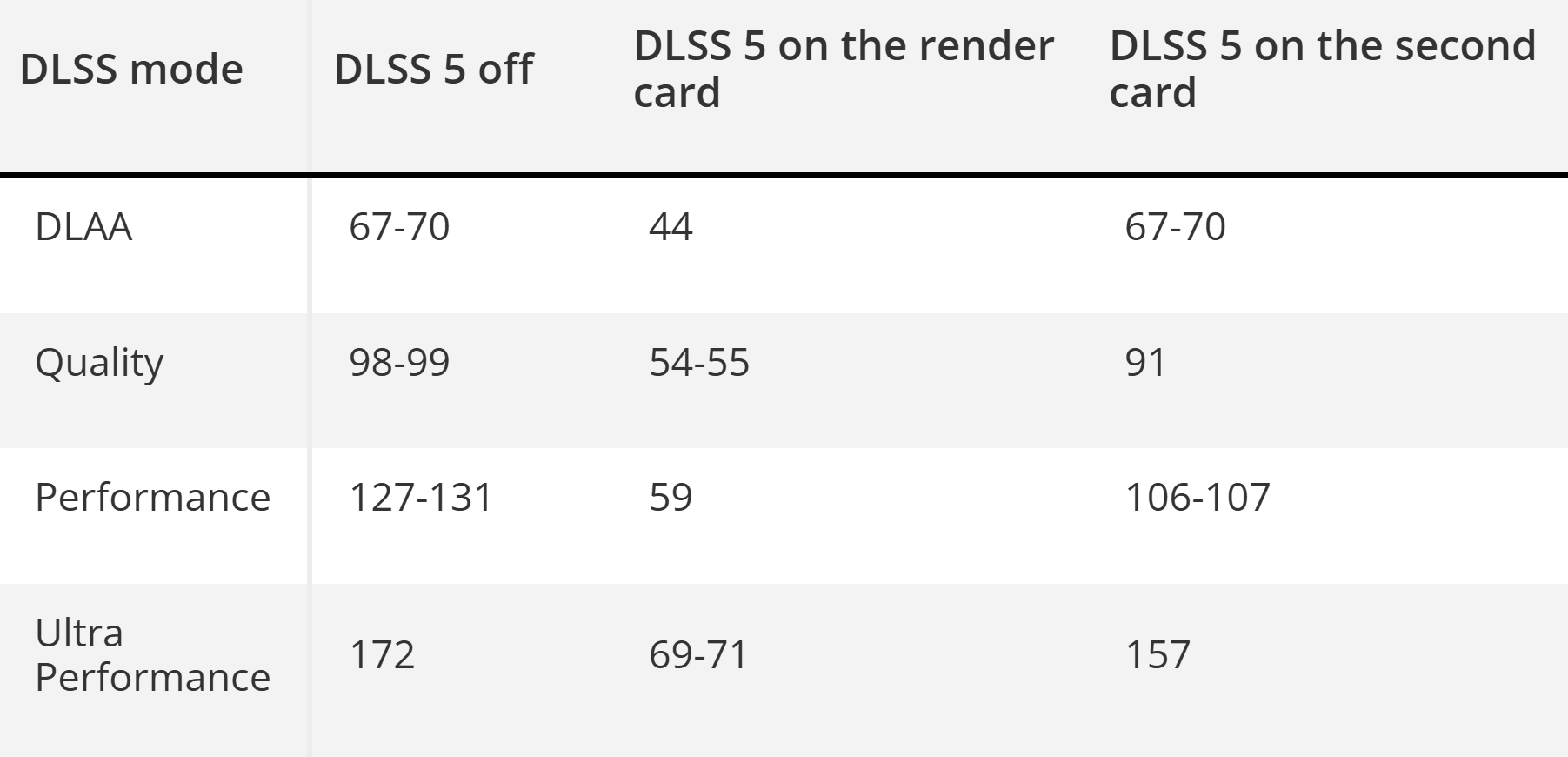
Unfortunately, there’s one detail that makes these results more complicated than they initially look. Those numbers measure how fast the game is running. They don’t necessarily show how many finished, neural enhanced frames are actually reaching your monitor.
See, the second GPU still has to keep up. If it can’t process everything the first card sends over, the mod can skip older frames and move on to newer ones. So the game could report 91 FPS without you actually seeing 91 different neural rendered frames per second. Ultimately, we still need measurements of the final output and the full delay to know exactly how much better the experience is.
There are some other issues as well. The developer specifically uses two monitors, with one connected to each card. Running the second GPU without its own display reduced throughput in testing. Plus, this ReShade implementation doesn’t have access to all the engine information that a native DLSS 5 integration would receive.
At the end of the day, this is still very experimental. But it is at least an interesting concept, and if DLSS 5 really does become ubiquitous, it could bring back dual GPUs in a way we haven’t seen in years.
Nvidia’s Melting Connector Problem Is BAD
Unfortunately, it’s not all good news today, as the melting 12V-2X6 connector is catching fire AGAIN! This time, it happened to the prominent reviewer Hardware Unboxed.
In a new video, Steve from Hardware Unboxed noticed that something was wrong after burning his hand on the cable coming from the card, an ASUS ROG Astral RTX 5090. He then checked it with a thermal camera, and the temperature eventually reached over 175 °C. On a power cable.
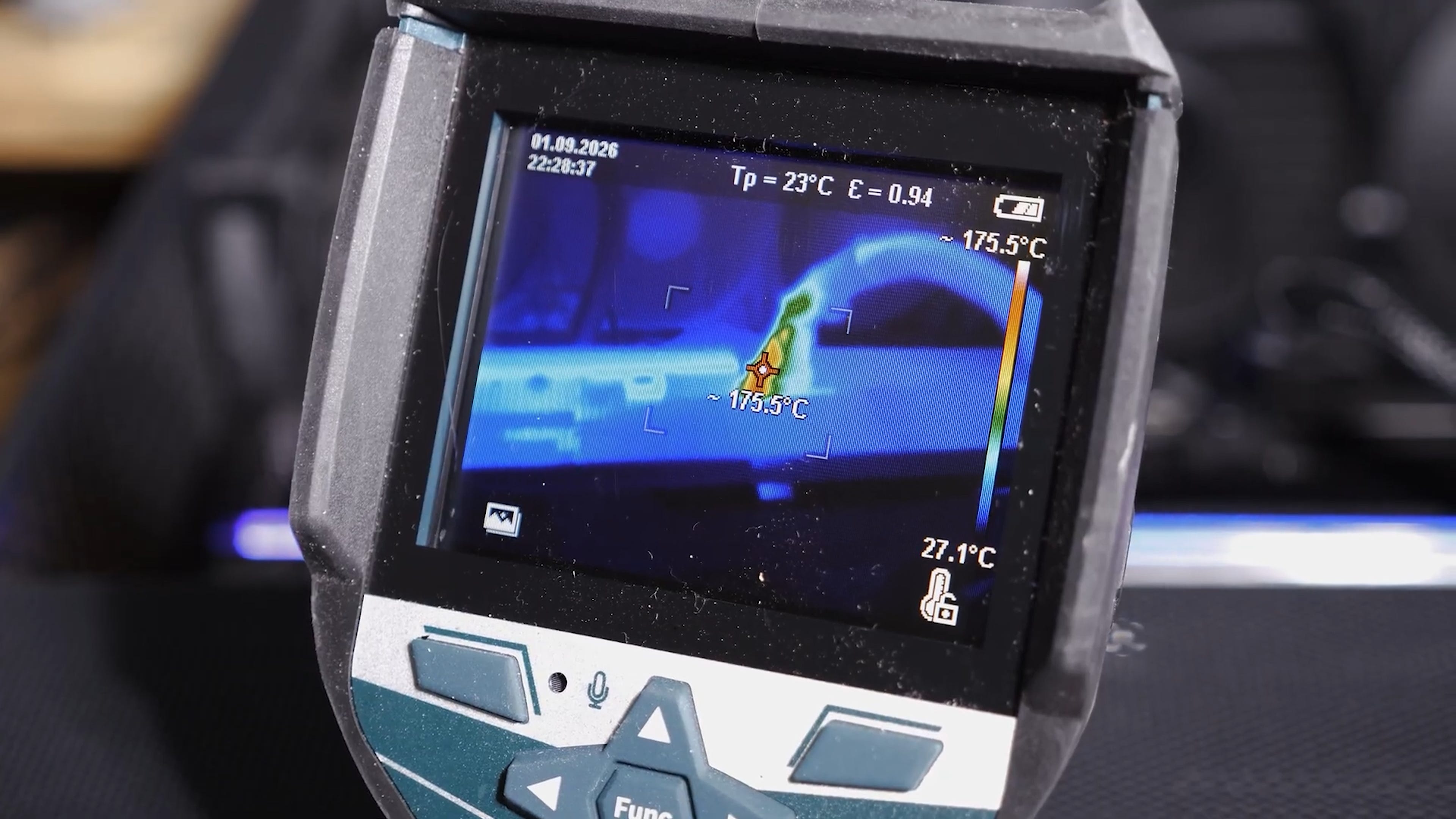
Using Thermal Grizzly’s WireView Pro, they also found a massive imbalance in how the current was distributed. Some conductors were carrying very little amps, while one reached a whopping 22 amps.
But here’s the interesting part: the worst damage was actually at the power supply end. The cable had melted into the PSU connector badly enough that they needed pliers to remove it. Meanwhile, the connection on the graphics card itself was relatively undamaged. Now, before anyone asks, Hardware Unboxed also said that the connector had been fully inserted.
At this point, all I can do is wonder why Nvidia hasn’t said a word about this. They told us that this issue was fixed with the RTX 50 series, but it’s clear that isn’t the case. Other reviewers have also seen their GPU’s connector melt, so it’s clear that this isn’t just a couple of one offs caused by a connector not seated properly. Something has to be done.
Quick Bytes
Nvidia Finally Gives Us A ReBAR Switch
Nvidia App 11.0.9 adds per-game Resizable BAR controls directly to the app. It also brings DLSS 4.5 Ray Reconstruction support. More settings we can actually control? I’m certainly not complaining.
GPU Shipments Are Up. Desktop Isn’t.
Jon Peddie Research says PC GPU shipments increased 10.4% last quarter to 75.5 million. That sounds pretty good, until you see that notebook graphics shipments grew 16.8%, while desktop graphics actually fell 4%. Those totals also include integrated graphics, so we aren’t talking about 75.5 million standalone gaming cards. Basically, parts of the PC market are doing fine. The people trying to afford a new desktop are having a slightly different experience.
Your SSD Has Its Own Special Cable Now
Lexar announced a portable SSD called the Muse, which it claims is the thinnest in the world. It measures just 3.8mm at its thickest point, with read speeds up to 1,050MB/s and 512GB or 1TB versions planned for Q4. Unfortunately, making it that thin apparently meant using a proprietary magnetic connection. It looks pretty neat, but I already know I’m going to lose the cable and discover that none of the other 400 cables in my drawer will work.
Framework Is Actually Refunding People
Remember when Framework’s LPCAMM2 memory prices went through the roof? Well, the company found a limited supply of cheaper 32GB and 64GB modules and is passing the savings along. Eligible pending orders through Batch 10 will get lower prices, while qualifying orders that already shipped will receive refunds. Prices still aren’t back to their original levels, but giving money back to people who already paid is something I’ll absolutely give them credit for. Plus, they obviously can’t help these absurd prices.
That’s all the bytes for this week.
Until next time, may your GPU get better with age, your RAM come with a refund, and your power cable stay below pizza temperature.