


Memory prices have been depressingly high for over 6 months at this point. Largely because the AI boom has convinced manufacturers that almost every available resource should be thrown at high-margin HBM instead of ordinary consumer memory.
But several developments this week suggest the supply situation could finally begin to improve.
The biggest comes from China’s CXMT, which is reportedly on track to reach approximately 350,000 DRAM wafer starts per month by the end of the year. That would put it only around 25,000 behind Micron’s projected capacity. The Chinese government is also reportedly encouraging CXMT to share its memory technology with three additional domestic manufacturers, all of which either have production capacity already or are preparing to bring it online.
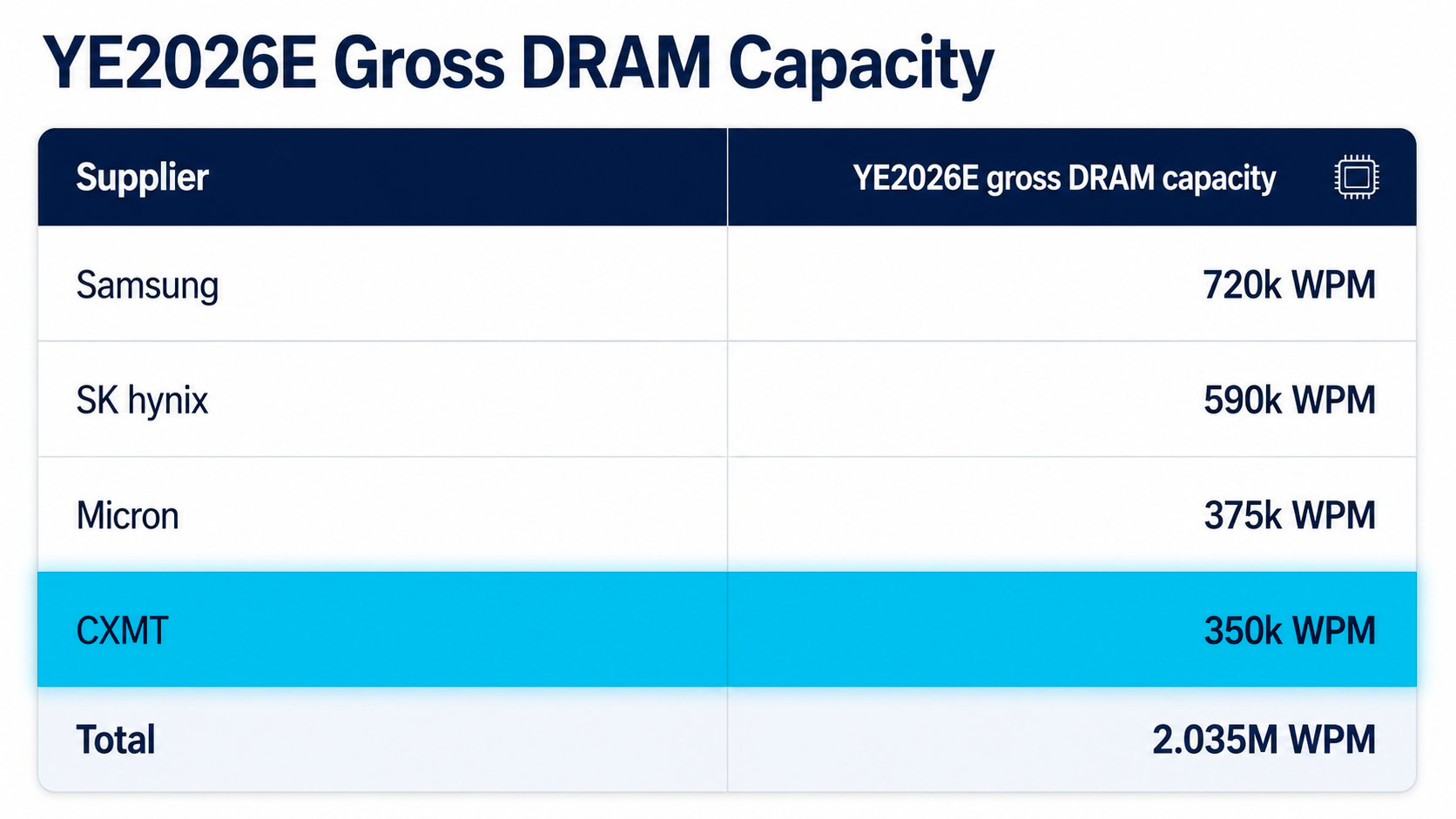
We do not yet know how that capacity will be divided between DDR4, DDR5, mobile memory, server products and HBM. But almost any meaningful increase in supply could help.
Even additional HBM production matters because the current problem is not simply that manufacturers cannot make consumer memory. It is that HBM is so profitable that companies have been prioritizing it over consumer products. More competition and supply in the HBM market could eventually reduce the incentive to abandon everything else.
There may also be some help coming from a new memory standard called SPHBM4.
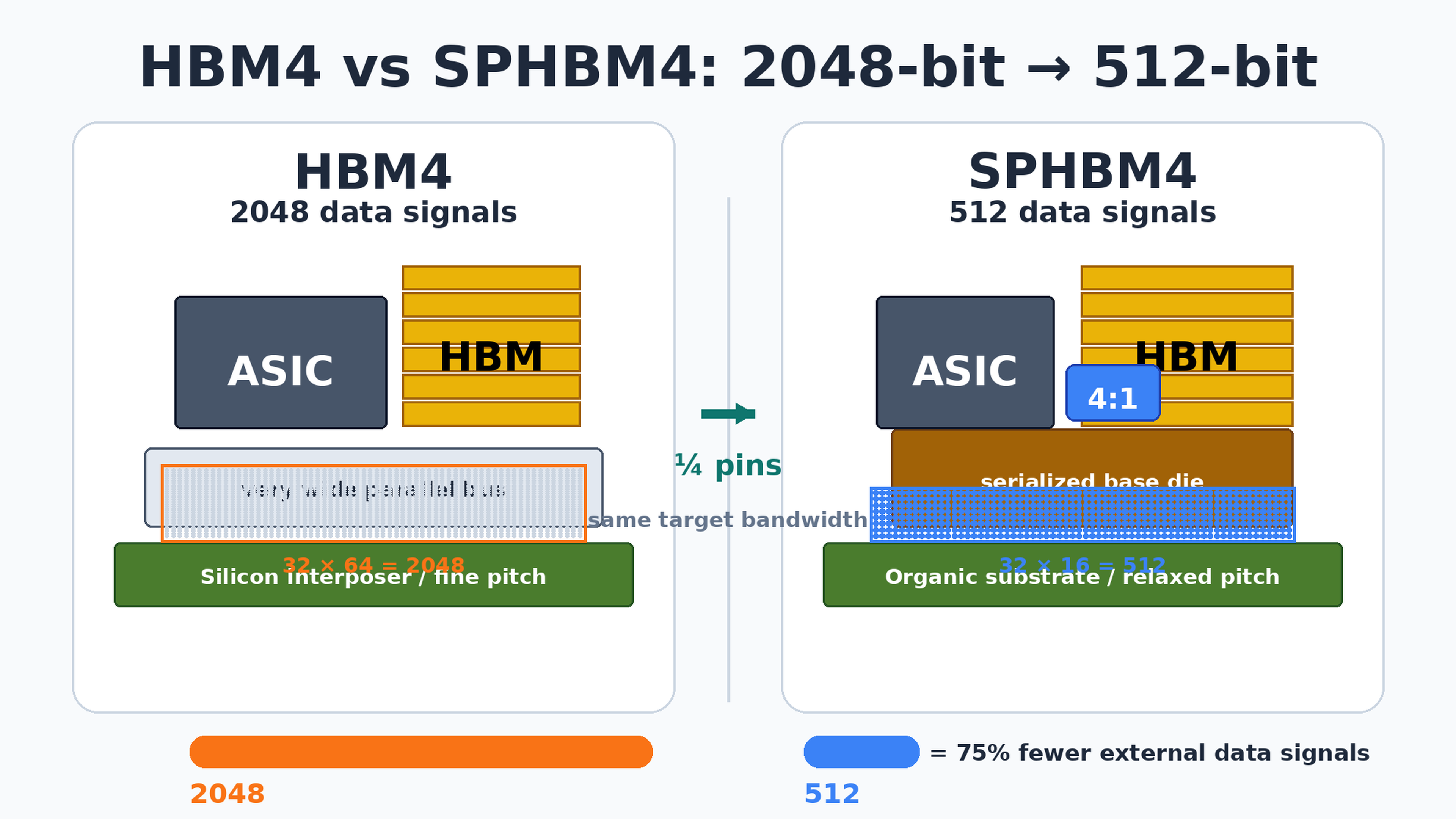
Traditional HBM4 uses an extremely wide 2,048-bit interface, which provides excellent bandwidth and efficiency but requires a massive number of physical connections between the memory and processor. That makes it heavily dependent on expensive advanced-packaging technologies such as silicon interposers and TSMC’s CoWoS.
SPHBM4 cuts the external interface to 512 bits and compensates by running those connections much faster. The goal is to preserve HBM4-class bandwidth while reducing the packaging complexity that has become one of the industry’s biggest bottlenecks.
Of course, this does not guarantee cheap RAM. AI companies may simply absorb every additional chip that manufacturers can produce. SPHBM4 also comes with tradeoffs involving signaling complexity and potentially lower efficiency.
Still, between China’s huge production expansion and an attempt to loosen the packaging bottleneck limiting HBM, the memory market may finally be attacking the shortage from more than one direction.
The Byte That Matters
More memory production does not guarantee that DDR5 prices collapse tomorrow. But between China expanding conventional DRAM output and the industry attacking the HBM packaging bottleneck, this is finally a potential supply solution—not just another attempt to sell consumers five-year-old hardware as the answer.
AMD’s Going Up to 8× Frame Generation?!
Hidden settings inside AMD’s Radeon drivers suggest the company is experimenting with multi-frame generation ratios reaching as high as 8×.
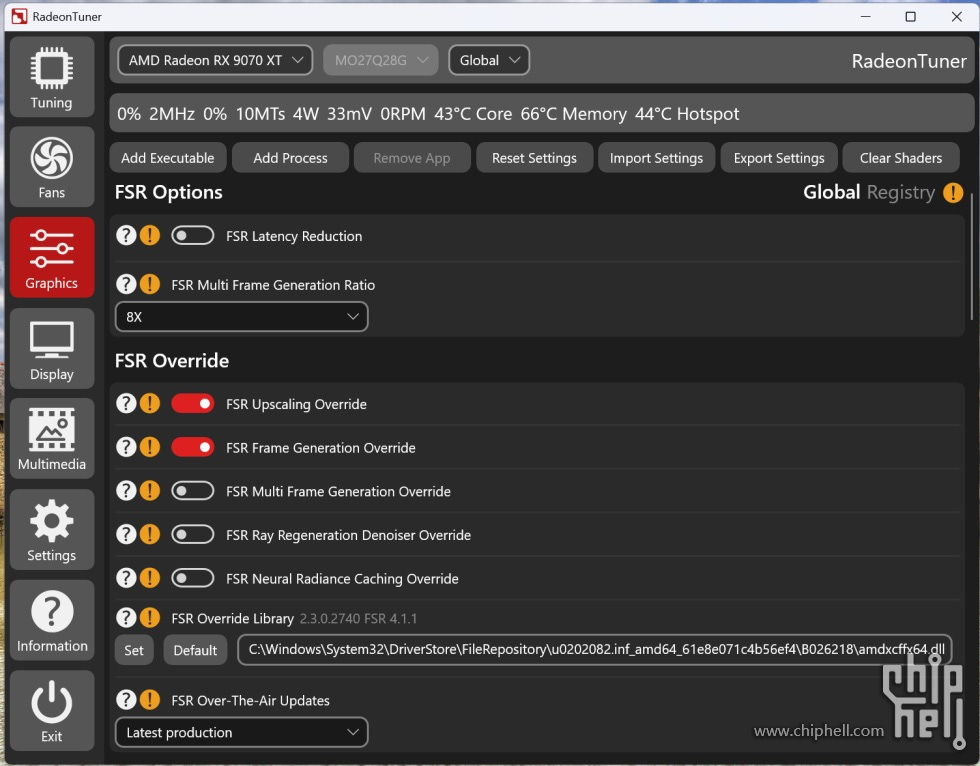
The options were discovered through RadeonTuner and include settings for ratios between 1X and 8X. At the highest setting, the GPU could theoretically generate seven artificial frames for every one traditionally rendered frame.
The feature does not currently work in games, however. AMD sometimes adds driver-profile options before the underlying functionality is ready, so this appears to be evidence of ongoing development rather than a usable feature.
AMD has already confirmed that its next-generation FSR technology will support multi-frame generation, making it likely that some version of this is coming.
The question is whether 8× frame generation is actually useful.
Generated frames can make motion appear smoother, but they do not process new player input. A game rendering natively at 20 FPS may be displayed as something resembling 160 FPS, but it will still feel like a 20 FPS game. To make matters worse, the frame-generation process can add some additional latency on top of that.
The Byte That Matters
AMD could leapfrog Nvidia at its own game. With that said, 8X frame gen really sounds more like a gimmick—and 6X frame gen does too, for that matter too. It can be visually nice if you have at least 60 FPS, but until the technology can accept input, real frames are still the way to go.
Nvidia’s Hotspot Reading Is Back
Since the initial release of Nvidia’s RTX 50-series cards, the company removed public access to the GPU’s hotspot temperature reading, including through their API used by programs such as HWiNFO and GPU-Z.
That was concerning because the hotspot reading measures the hottest area of the GPU die, which can be dramatically warmer than the average temperature shown to users.
A Brazilian GPU repair technician demonstrated why that matters while diagnosing an RTX 5070 Ti. The card showed a fairly normal average temperature of around 68°C, while Nvidia’s internal diagnostic software reported hotspot temperatures reaching approximately 106–107°C. The underlying issue appeared to involve poor cooler contact and dried thermal material.
Now, both HWMonitor and HWiNFO have restored RTX 50 hotspot monitoring—but not because Nvidia officially brought it back.
According to the developer behind MSI Afterburner, the programs are reportedly accessing the information directly through the GPU’s hardware registers rather than Nvidia’s supported NVAPI interface. MSI Afterburner cannot use the same method because it is officially partnered with Nvidia, although the reading may be accessible through the RivaTuner project that a lot of people download with Afterburner.
So Nvidia didn’t actually reverse their decision.
Developers just found a back door.
The First Zen 6 Benchmark Looks Ridiculous
An early benchmark for AMD’s upcoming Zen 6-based Medusa Point mobile processor was recently found in Geekbench.
The engineering sample reportedly includes 10 cores and 20 threads, divided between four traditional cores and six efficiency cores. Despite Geekbench reporting a weirdly low maximum frequency, the chip apparently outperformed the 10-core Ryzen AI 9 365 by an unreal 28.5% in single-core performance and 21.6% in multi-core performance.
The wild thing about these results is that the CPU appears to be an early engineering sample, meaning there’s a ton of potential for even more performance before release.
Ultimately, Zen 6 continues to look like a massive architectural leap—the likes of which we haven’t seen in nearly a decade.
Quick Bytes
RTX 50 Super Looks To Be Coming This Time
Seasonic has added the rumored RTX 5080 Super to its power-supply calculator after previously listing the 5070 Super and 5070 Ti Super. The listing gives the 5080 Super a 415-watt rating, compared with 360 watts for the regular model. Rumors also point to 24GB of GDDR7 memory, so a 50% increase over the existing RTX 5080.
Shader Stutter May Finally Become Less Annoying
AMD and Microsoft have expanded Advanced Shader Delivery to every RDNA generation, including RDNA 1 and RDNA 2. The system downloads shaders compiled specifically for the user’s hardware, potentially reducing initial loading times and in-game shader-compilation stutter. AMD claims load-time reductions reaching 95%, although support remains limited to compatible games through the Xbox PC app for now.
AMD Is Bringing Back Some Ancient CPUs
AMD quietly introduced three entry-level processors based on Zen+ and Zen 2, including the eight-core, 16-thread Ryzen 7 4700LE. The chips are primarily aimed at OEM systems and offer manufacturers cheaper DDR4-compatible options while newer memory remains expensive. It is not exactly technological progress, but it is at least another way to avoid paying current DDR5 prices.
AMD Has Decided to Pick a Fight With Apple
AMD launched a direct comparison against Apple’s budget MacBook Neo, emphasizing Windows gaming support, touchscreen options, storage and connectivity. AMD notes that 15 of the top 20 PC games do not run natively on the MacBook, although the Ryzen 5 system used in AMD’s comparison is not exactly a gaming powerhouse either.
Thank you for being a part of the first official Meld Bytes issue! As always, have a great day.
This situation makes me feel like I am 13 again, with hardware catalogs dreaming about upgrades that my budget could never handle, waiting until I was grown to buy all the things I wanted but could not afford.