


The PC market as a whole tends to live in the extreme. A cyclical nightmare of euphoric highs, followed by crashing lows. Part of it is the inability for the market to properly predict upcoming cycles. But it’s also a supply chain that can be too complex to instantly ramp up production of any given chip in response to new demand. So it’s slow reaction can be understandable. And most of it clearly isn’t intentional, or you’d never see the market crash back down to new lows. Think the crypto boom of 2020 followed by the subsequent crash in 2022.
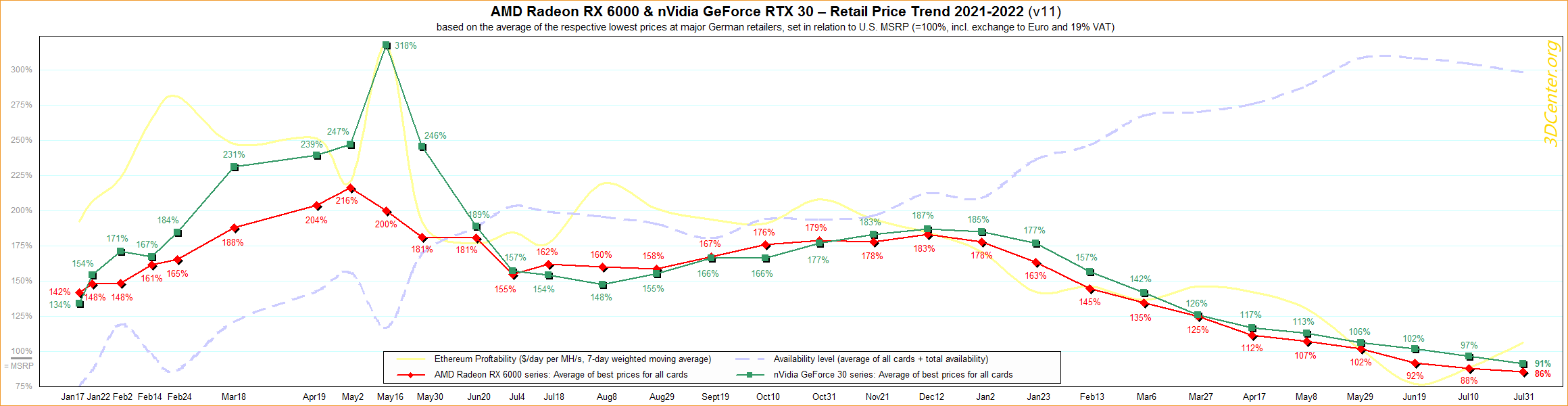
Of course, we’ve had multiple cycles over just the last few years, but the AI boom may just outlive them all. Luckily, AMD’s next generation CPUs and GPUs are starting to look absolutely ridiculous, so there’s at least something to look forward to.
The Desktop PC Market Is Getting Crushed
Before we get into anything positive though, I have to discuss the ugly. And let’s just say, your retina’s will burn.
According to Mercury Research, desktop CPU shipments fell by more than 20% in a single quarter. What’s crazy though, is that the overall CPU market actually grew by more than 10% during that same period. All thanks to laptops and, I’ll bet you can’t guess… Servers.
Okay, you guessed it. Basically, processors aren’t collapsing everywhere.
But on desktop, they’re getting obliterated.
As for why, I’m sure you’ll guess that as well. Limited GPU availability combined with ridiculously expensive memory and SSDs are making a full desktop upgrade harder and harder to justify.
And this is even worse than what AMD warned about just a few months ago. Back then, Lisa Su predicted a 20% gaming revenue decline in the second half. Instead, prices fell over 20% in just one quarter.
Unfortunately, we’re starting to see the consequences go beyond a bad sales chart.
Australian custom PC builder, Dream PC, recently announced that it was shutting down after almost a decade in business. The company specifically pointed to years of component pricing and availability chaos, from COVID, to crypto, and now the enormous demand created by AI.
Don’t worry though, because it doesn’t stop there. As Pine64 also announced that they’ve stopped production across their entire Linux hardware lineup because of DRAM and eMMC shortages. The company currently doesn’t expect production to restart until sometime after the middle of 2027.
And unless memory pricing turns around faster than everyone’s saying, I highly doubt they’ll be the last.
2027 Is The Year of AMD
Thankfully, the future of desktop hardware looks considerably more interesting than the present. Because both AMD’s next generation Ryzen CPUs and Radeon GPUs are gearing up to be their biggest upgrades EVER!
Ryzen 10,000 (PLEASE don’t call it AI)
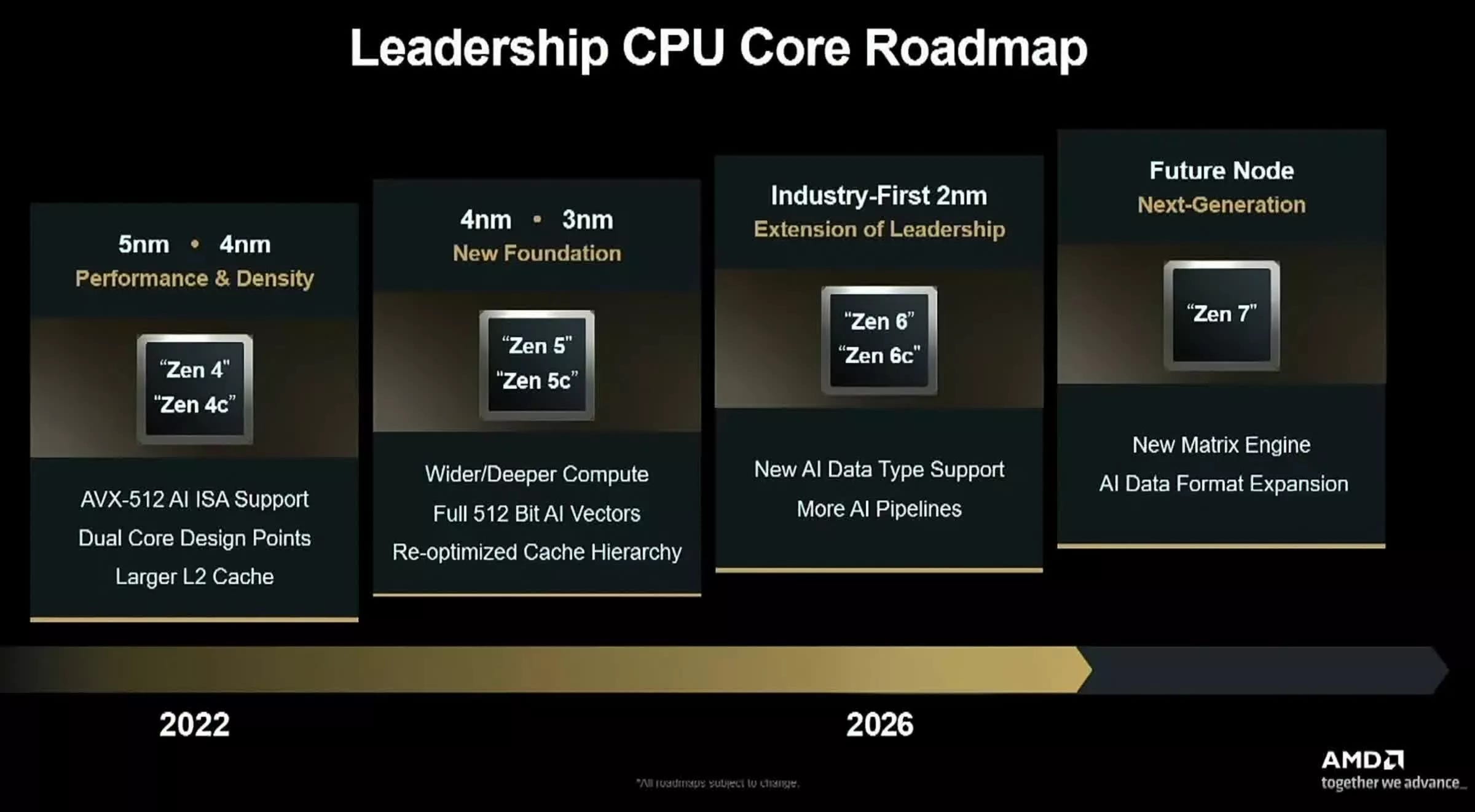
The upcoming Zen 6 desktop family, codenamed Olympic Ridge, are confirmed to be built on TSMC’s 2nm process. For those who didn’t know, that’s two node jump from Zen 5’s 4nm process.
But that’s just the beginning, as one leak claims that AMD is planning to push the clocks all the way up to 7GHz! In fact, a source from Moore’s Law Is Dead claims to have documentation that references eventual qualification samples actually hitting that clock speed. Meaning AMD really expects these to do it. For comparison, that’s an unreal 23% faster than Zen 5’s 5.7GHz. If this ends up being true, it’ll be the biggest clock upgrade since 1st Gen Ryzen.
Not only that, but according to another leak, we could be looking at a 10%+ average IPC increase over Zen 5. Don’t forget that IPC (Instructions Per Clock) doesn’t account for any clock increases, core count increases, etc. It’s just how much faster the CPU is at the same clock. And it’s very application specific because it’s ultimately dependent on the architectural changes from one architecture to the next.
And the upgrades keep on coming, as multiple leakers claim that Zen 6 is adding more cores! Specifically, it’s set to get as many as 24 cores, versus 16. Making for an increase in core count by as much as 50%. And it’s all thanks to the chiplets that make up the Zen architecture going from 8 to 12. Meaning the entire product stack is going up in cores. Which is huge news for AMD’s X3D chips. Because it means that the 3D V-cache chiplets would come with 12 cores instead of 8. Think the Ryzen 7 10800X3D.
To top it off, all of this is officially coming to AM5 motherboards. AMD themselves recently listed Olympic Ridge with AM5 support. Not only that, but their APUs, codenamed Medusa Point, also appeared with both mobile FP10 and AM5 support. So AMD’s clearly planning to bring their Zen 6 based APUs to desktop. Of course, none of this guarantees that every existing AM5 motherboard will get Zen 6 support, but the platform itself is sticking around for yet another generation.
RX 10,000
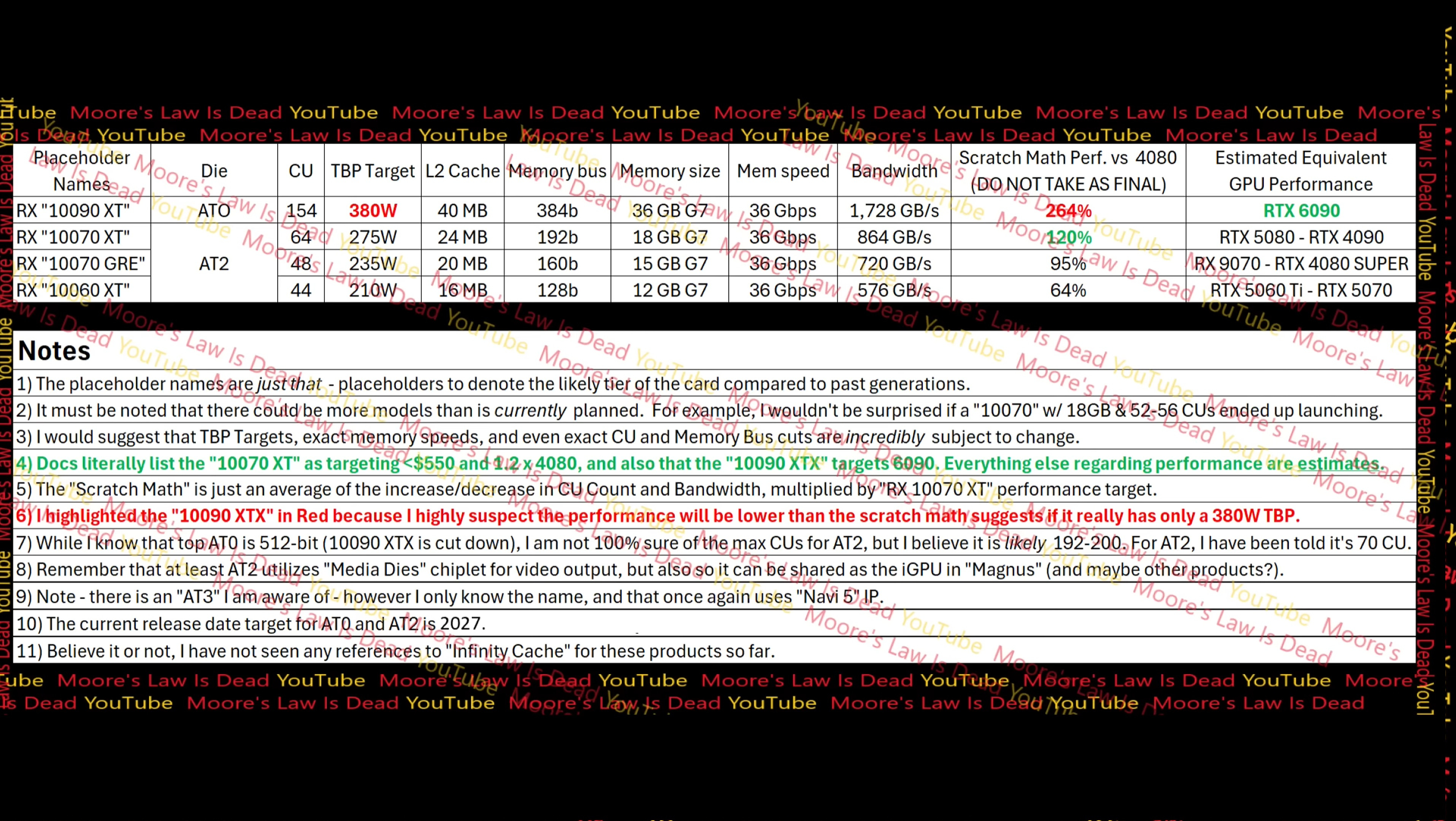
Moving over to GPUs, AMD’s next generation Radeon cards are set to be based on either their RDNA 5 architecture, or possibly UDNA. Remember that AMD confirmed a little while back that the company was moving over to a unified architecture, with both their gaming RDNA and compute CDNA becoming one UDNA. And according to one leak, RDNA 5 is already based on UDNA, but with some tweaks made for the PS6. It sounds like it could still be called RDNA 5, but according to the leak, it’s still ultimately based on UDNA.
And that architecture helps to explain the incredible 154 CUs claimed to be in the top end card. That’s a whopping 2.4X the cores than AMD’s current Gen RX 9070 XT. And the well known leaker, Kepler, actually claimed that the top end AT0 die will 100% release for consumers. As long as it does actually release.
Finally, AMD themselves have confirmed some incredible stuff with Project Amethyst. They claim themselves that it’s set to go in future hardware, so we can definitely expect it in RDNA 5. Like their new dedicated hardware block, called a radiance core. This is made specifically for ray traversal, so we can expect some big performance jumps out of AMD’s next Gen ray tracing. They also announced Neural Arrays and Universal Compression. Ultimately, 2027 is set to be the year of AMD. And both Intel and Nvidia need to watch out.
Nvidia’s RTX 5000 Performance Is Really Weird
Nvidia’s RTX 50 series has a pretty major problem. And it can be easy to miss if you only look at traditional GPU reviews.
In certain games, especially as you move down from native 4K toward 1440p or 1080p, the RTX 50 series can lose a shocking amount of its advantage. There are even individual examples where AMD’s RX 9070 XT can match or beat an RTX 5080.
For example, In Call of Duty: Black Ops 7 at 1440p, the 9070 XT beats the 5080. In Borderlands 4 at 1080p, the 9070 XT and 7900 XTX can effectively match the 5080. And Space Marine 2 produces one of the strangest examples of all. At 4K, the RTX 5090 is significantly faster than the RTX 4090. Move down to 1080p, though, and the 4090 actually crushes the 5090.
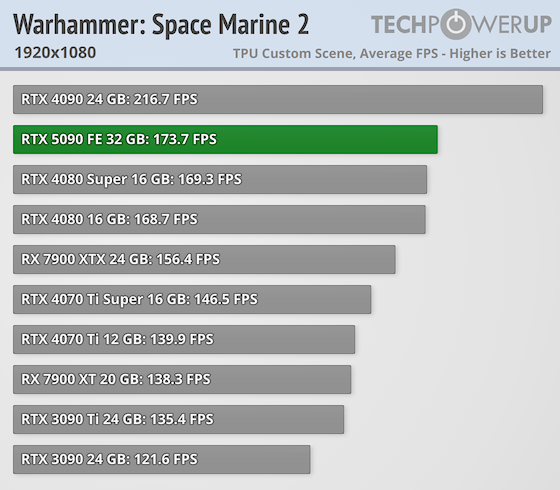
Now, some amount of shrinking GPU performance differences at lower resolutions is completely normal. The lower the resolution, the more your CPU becomes the bottleneck. But some of these results clearly go well beyond the normal scaling you would expect.
As for why, there are a few theories. With the biggest being Nvidia’s shift in hardware scheduling by adding the new AMP or AI Management Processor. AMP basically adds a layer between the CPU and gigathread engine, which some people think might be adding latency if the workloads aren’t optimized for it. Another is Nvidia’s greater driver overhead in CPU limited scenarios. Ultimately, there doesn’t appear to be one single proven explanation covering every game.
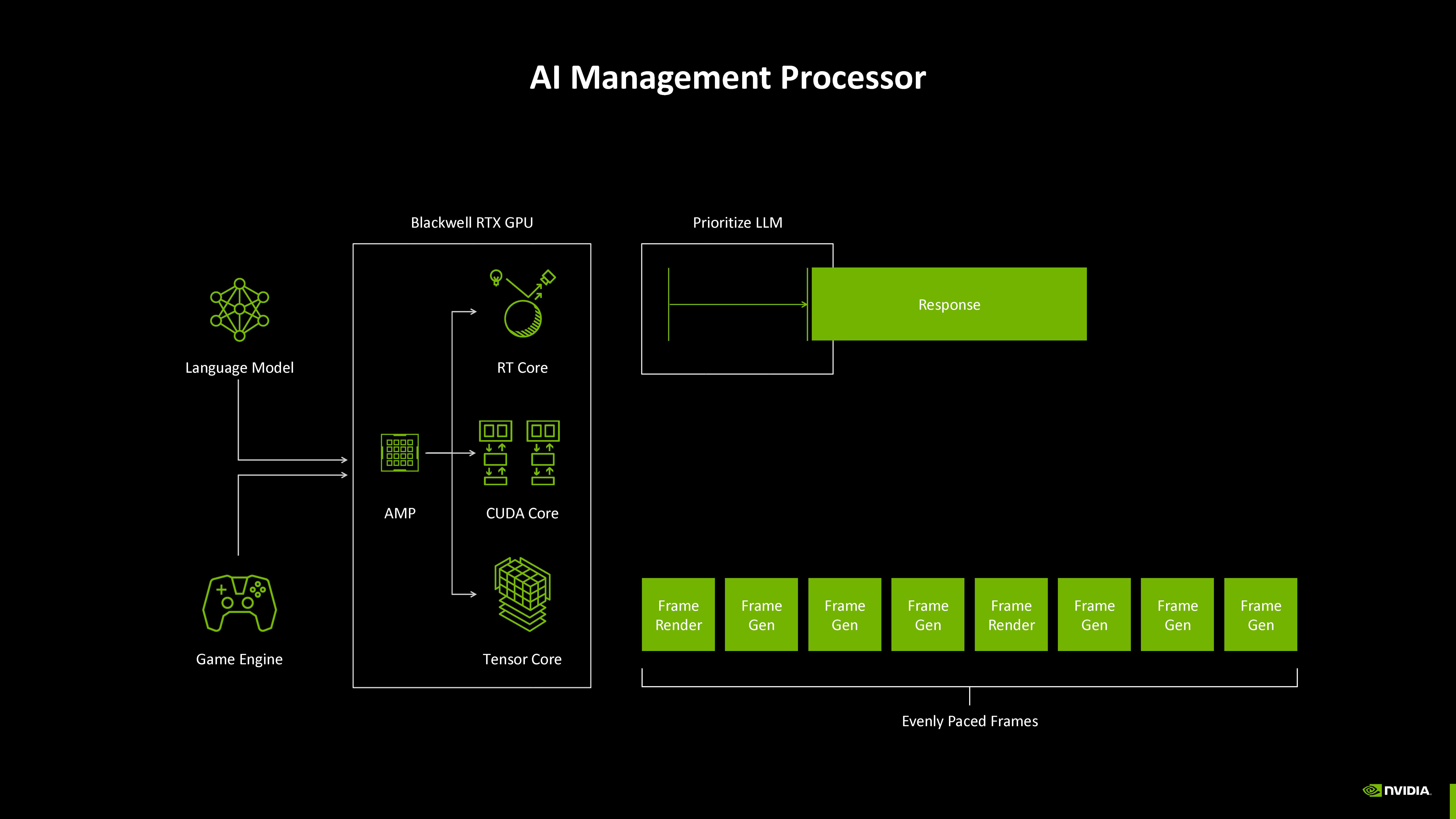
And believe it or not, this actually matters even if you bought a 5090 specifically for 4K. Because a lot of people use upscaling.
Specifically, even DLSS Quality at 4K internally renders at 1440p before reconstructing the final image. If you move down to balanced or performance, the internally rendered resolution gets even worse. So if a GPU behaves strangely as internal resolution drops, native 4K benchmarks may not tell you exactly how the card will behave when you actually use DLSS.
Basically, before dropping thousands of dollars on a GPU, look at benchmarks using the settings and resolution you actually plan to play at.
Microsoft Really Wants RTX Spark To Work
At the same time, Microsoft is putting a very unusual amount of effort into Nvidia’s upcoming RTX Spark PCs.
In a new, experimental Windows 11 build, it includes a hidden feature called IntelligentCarveout. This would essentially allow systems with unified memory to reserve part of that memory specifically for graphics and AI workloads. That’s important because RTX Spark combines its CPU and Blackwell GPU with a shared memory pool that can reach 128GB. Basically, instead of the CPU having one pool and the GPU having its own, everything shares the same memory.

What’s wild is that Microsoft already changed Windows earlier this year to allow RTX Spark’s GPU to access a much larger portion of that unified memory. Now, it’s apparently working on actual user facing controls around the same architecture. And it’s not so much the changes that Microsoft made that interests me. Rather, it’s the fact that Microsoft made them in the first place.
Let’s just say that the OS maker doesn't usually make multiple fundamental memory management changes for some random niche PC nobody expects to sell. So they clearly expect Nvidia’s new platform to matter.
Whether that means RTX Spark is incredibly good or Nvidia is simply incredibly persuasive remains to be seen.
Probably a little of both.
Quick Bytes
CPU-Z Just Got Its Biggest Upgrade In Years
CPU-Z 3.01 is out, and CPUID has massively expanded what the program can actually do. Its new Validator V3 can run more than 100 system health checks in under 10 seconds, looking for things like outdated drivers, overheating hardware and suspicious system configurations.
There’s also a new validation system for extreme overclocking, and a more advanced mode is being developed with stress testing and deeper CPU, GPU, RAM and storage diagnostics.
The RTX 3060 Somehow Got MORE Expensive
Remember Nvidia brought the 12GB RTX 3060 back because the entry level GPU market needed more options? About that…
An MSI RTX 3060 12GB that relaunched at Newegg for around $330 in July is now listed at $480. That’s a 45% increase in less than two months. That’s actually more expensive than when it first released back in 2021!
Intel Built A CPU Around Being Cheaper
Intel just revealed more about their upcoming Wildcat Lake. The architecture behind its mainstream Core Series 3 laptop chips, designed specifically for cutting costs.
Compared to Panther Lake, Intel cut the compute die by 38%, reduced the P-core count, halved the GPU configuration, shrank the NPU and replaced its more expensive Foveros packaging with an organic UCIe design.
Intel says Wildcat Lake is meant for price-sensitive laptops, with systems starting around the $450 range.
920Hz Monitors Are Apparently Necessary Now
ASUS recently announced a new gaming monitor capable of running at up to 920Hz. You heard that right. Nine hundred and twenty!
The 27-inch ROG Strix XG27ACNS uses a Fast IPS panel and can switch between QHD at 475Hz, 1080p at 620Hz and 720p at 920Hz. ASUS also announced a 720Hz OLED esports display at Gamescom.
Now, I’m not saying 920Hz is unnecessary. I’m just saying if I still miss the shot, we are officially out of hardware to blame.
That’s all the bytes for this week.
Until next time, may your socket survive another generation, and your five-year-old GPU never relaunch for more than it cost new.
PS: I apologize for being so late this week. Between getting COVID and someone trying to steal my catalytic converter, it’s been a tough one. I definitely hope to be on time from now on.
Did anyone win the Ram give away yet?