


For months now, we’ve been hearing incredible rumors about AMD’s next generation consumer hardware. From Radeon GPUs with massive core counts to Ryzen CPUs with next level clock speeds, there’s been a lot to get excited about.
But the problem with leaks is pretty obvious. Until we get something official, we don’t really know how much to believe.
Well, AMD finally gave us something official. And it confirms some big things about those earlier leaks.
There’s also a new fix for one of PC gaming’s most annoying problems, Nvidia’s entering a new market and more! So let’s get to it…
The Leaks Were Right!
Something huge was recently discovered inside AMD’s latest Adrenalin 26.9.2 driver. According to VideoCardz, AnandTech forum member SixPie found three completely unannounced hardware codenames inside AMD’s official software: AT2, ATLite3, and Gainsborough. AT2 is the codename that leaked out months ago as one of the GPUs set to power AMD’s RX 10000 series cards. Remember, we even heard that it stands for Alpha Trion.
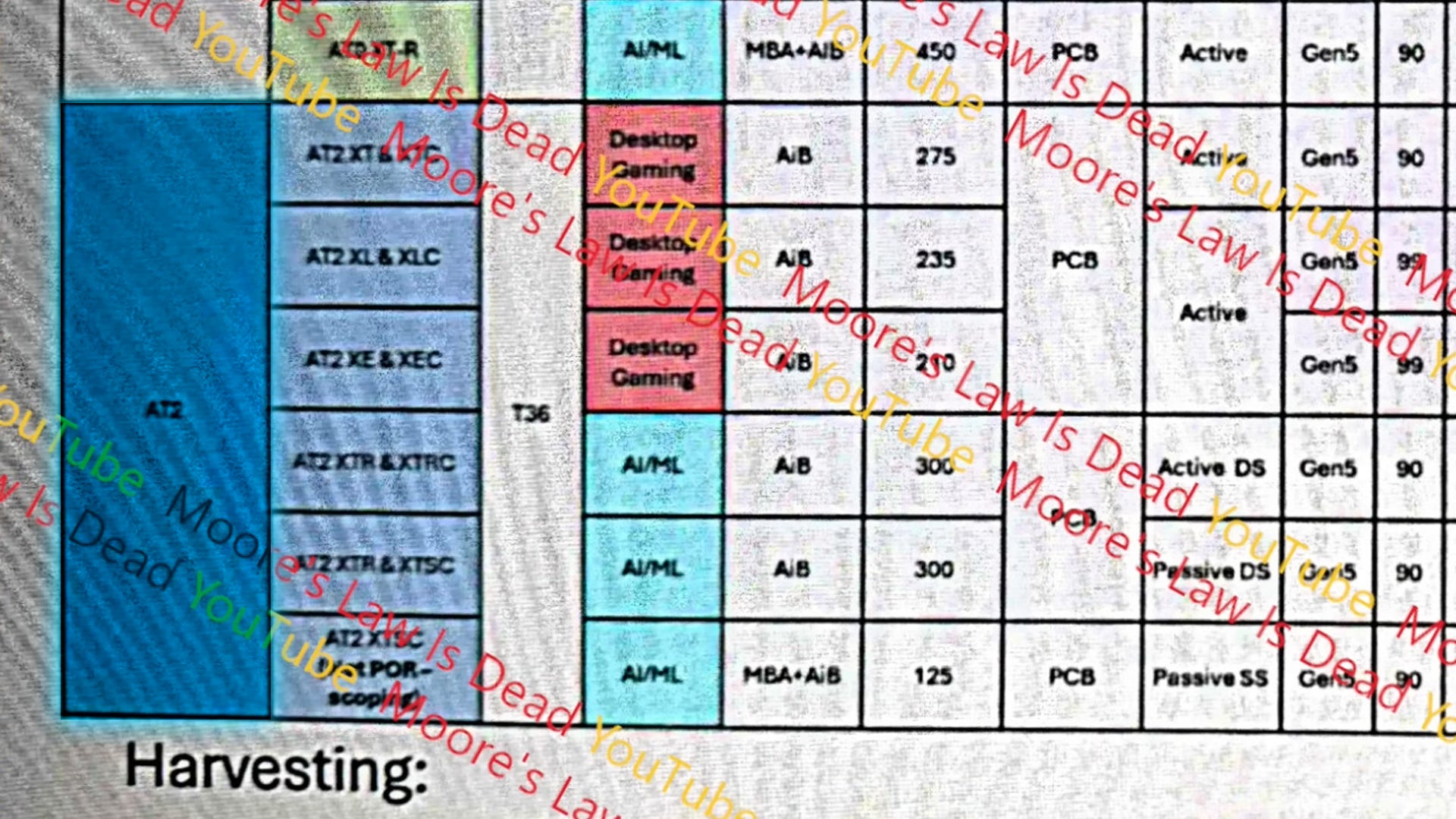
Now, the reason this is such a big deal is because AT2 isn’t just some obvious continuation of AMD’s previous naming scheme. For example, with things like RDNA 2, 3, and 4, we can obviously guess what comes next. But the actual GPUs inside AMD’s graphics cards have used the Navi codename for years. Like the RX 9070 XT is built from a GPU codenamed Navi 48. So because leakers were already calling these next Gen GPUs AT0, AT2, etc., this proves that they clearly had inside information.
Of course, that doesn’t necessarily mean that every tiny piece of information that they share is 100% accurate. Even AMD at this point likely doesn’t know every tiny detail. But clearly, at least some of the information they’re getting appears to be legitimate, which makes everything else they’ve been saying worth another look.
Last week, I discussed the massive AT0 GPU that’s rumored to feature as many as 154 Compute Units. If AMD actually delivers something close to that, it could represent a serious return to the highest-end gaming GPU market. And while AT2 is a much smaller GPU, it actually gives us some big insight into the higher end card.
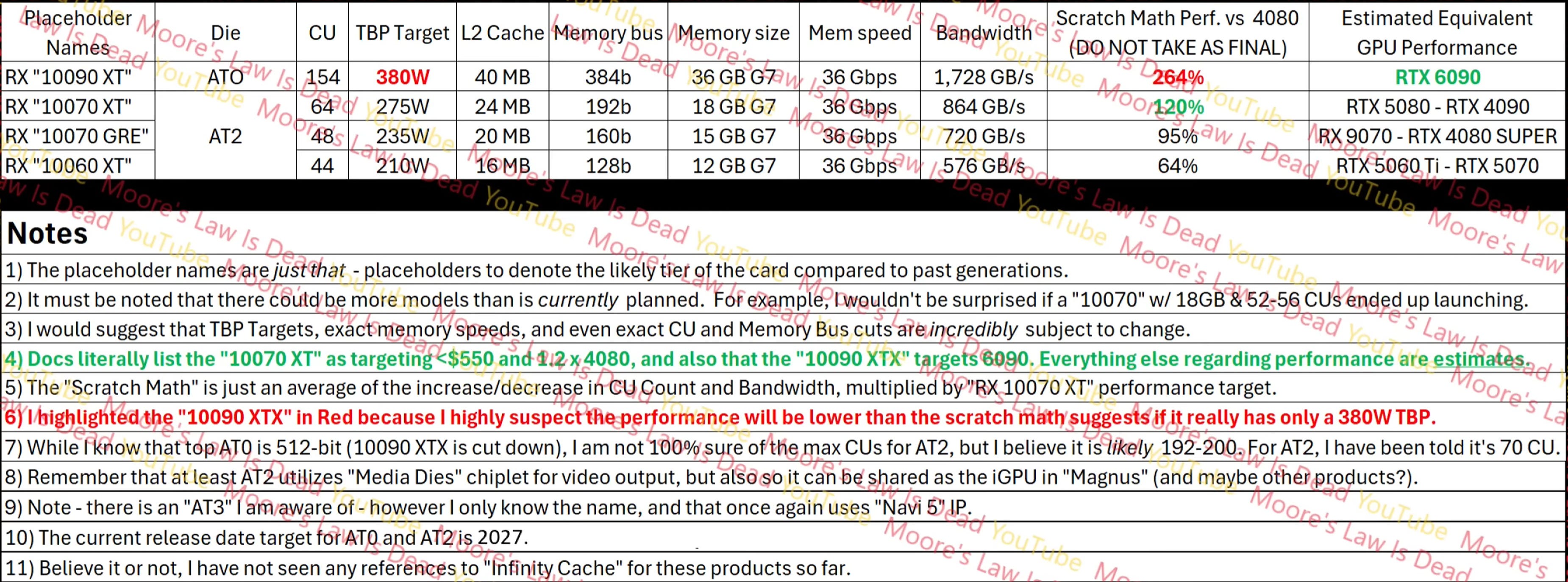
For example, AT2 is expected to come with 70 CUs, but the highest end gaming card built around it is rumored to use a cut-down version with just 64. And 64 CUs is exactly the number of CUs inside the RX 9070 XT. I know that’s probably a bit disappointing, but keep in mind that we’ve already seen some big claims made by one of the leakers who leaked out that AT naming. According to Kepler, RDNA 5 is targeting clock speeds between 3.1 and 3.4 GHz. Not only that, but he also claims a major improvement to how effectively the architecture utilizes its shaders. So even with the exact same number of compute units, AMD could potentially deliver a huge increase in gaming performance. Meaning that 154 CU GPU would be an insane boost in performance.
Not only that, but this points to another leak from Kepler, where he claims that AMD will only release their AT2 GPU next year, with everything else from AMD and Nvidia being pushed back to 2028. That part honestly sucks, but it is at least somewhat interesting. Because it would give AMD a huge opportunity to launch at least one next generation cards months before Nvidia. With that said, Moore’s Law Is Dead still claims that AMD will release more cards next year. But because this only mentions AT2 and not AT0, things are leaning more towards Kepler’s claim. Either way, this could be really bad news for Nvidia.
The PS6 And Steam Deck 2
AT2 wasn’t the only codename discovered inside AMD’s new driver, with the other two being more exciting for console and handheld gaming. Starting with ATLite3, leaker Kepler believes that this could be the graphics processor used inside Orion, AMD’s rumored next generation PlayStation 6 chip. And the naming actually makes a decent amount of sense, because during the PS5’s development, AMD used the name Navi10Lite for early versions of the console’s graphics hardware. This obviously doesn’t prove that the chip is made for Sony, but that “Lite” designation is a pretty big hint.

Finally, we have the codename Gainsborough, which is even more obvious. For those who may not know, the original Steam Deck was built from a chip called Aerith. And the Steam Deck OLED used a revised chip called Sephiroth. What makes those two chips similar is that they’re both names from Final Fantasy VII. And Aerith’s full name is Aerith Gainsborough.
Not only that, but shipping manifests have also been leaked with that Gainsborough codename, including hardware validation equipment that could indicate physical silicon is already being tested. Kepler believes this chip could be intended for Valve’s next generation Steam Deck. And Valve has repeatedly made it clear that they want a meaningful performance and efficiency improvement before releasing a true successor, so a new AMD processor could potentially give them exactly that.
Between the PS6, Steam Deck 2, and AT2 desktop GPU, AMD’s next generation graphics architecture is starting to get really exciting.
FSR 4 Is Coming To APUs
Speaking of handhelds, AMD just made an announcement that could benefit a bunch of gaming devices we already own. According to a new report from VideoCardz, AMD’s executive Jack Huynh confirmed during a meeting with Korean media that the company intends to bring FSR 4 to APUs, gaming laptops, and handheld gaming devices before the end of 2026. And what’s even better is that AMD reportedly isn’t limiting this to entirely new processors. They did mention new chips coming, but they’re apparently targeting existing APUs as well, which could make this a pretty huge update for current handheld and laptop owners.
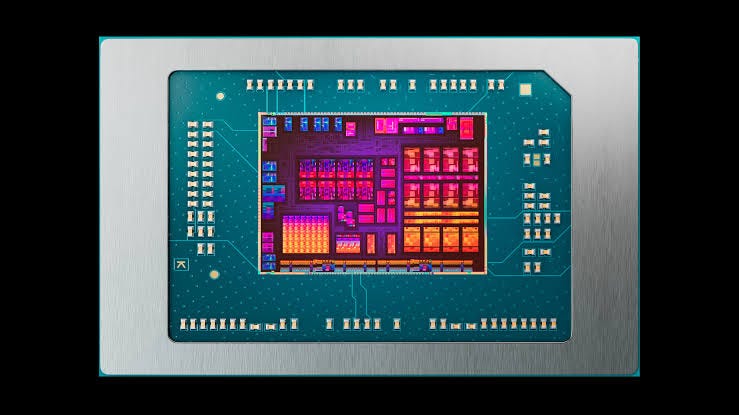
Of course, we know that AMD already released their machine learning based FSR 4 on RX 7000 GPUs, with RX 6000 support coming early next year. But many people wanted to know if the company would release the tech on APUs as well. According to Jack Huynh, AMD has developed a lightweight FSR 4 model designed specifically for integrated graphics. The goal is to maintain good image quality, while reducing processing overhead and latency enough to make the tech practical on lower-power hardware.
Now, we don’t know exactly which existing APUs will receive support, how performance will compare to the desktop implementation, or whether every handheld manufacturer will offer it. But I have to say that I’m pretty excited to see this. There are millions of devices that currently use AMD APUs, so it could open up a whole new level of image quality for a huge number of gamers.
PC Gaming’s Most Annoying Problem Is Fixed
There are few things more annoying than buying a powerful gaming PC, launching a brand-new game, and having it stutter like you’re running it on hardware from 2008. Well, the solution is finally being released broadly in its first game. Plus, it’s coming to Nvidia GPUs.
So for those who don’t know, PCs have had a pretty major issue for years now that consoles simply haven’t. And it all comes down to one problem: Shaders. See, a game’s shaders have to be compiled to work with both your GPU and driver. This is easy for consoles because developers know exactly what hardware and drivers they have. So they simply pre-compile them before the game is downloaded. But because PCs can have a massive number of different hardware and software combinations, PC games have been forced to compile them locally.
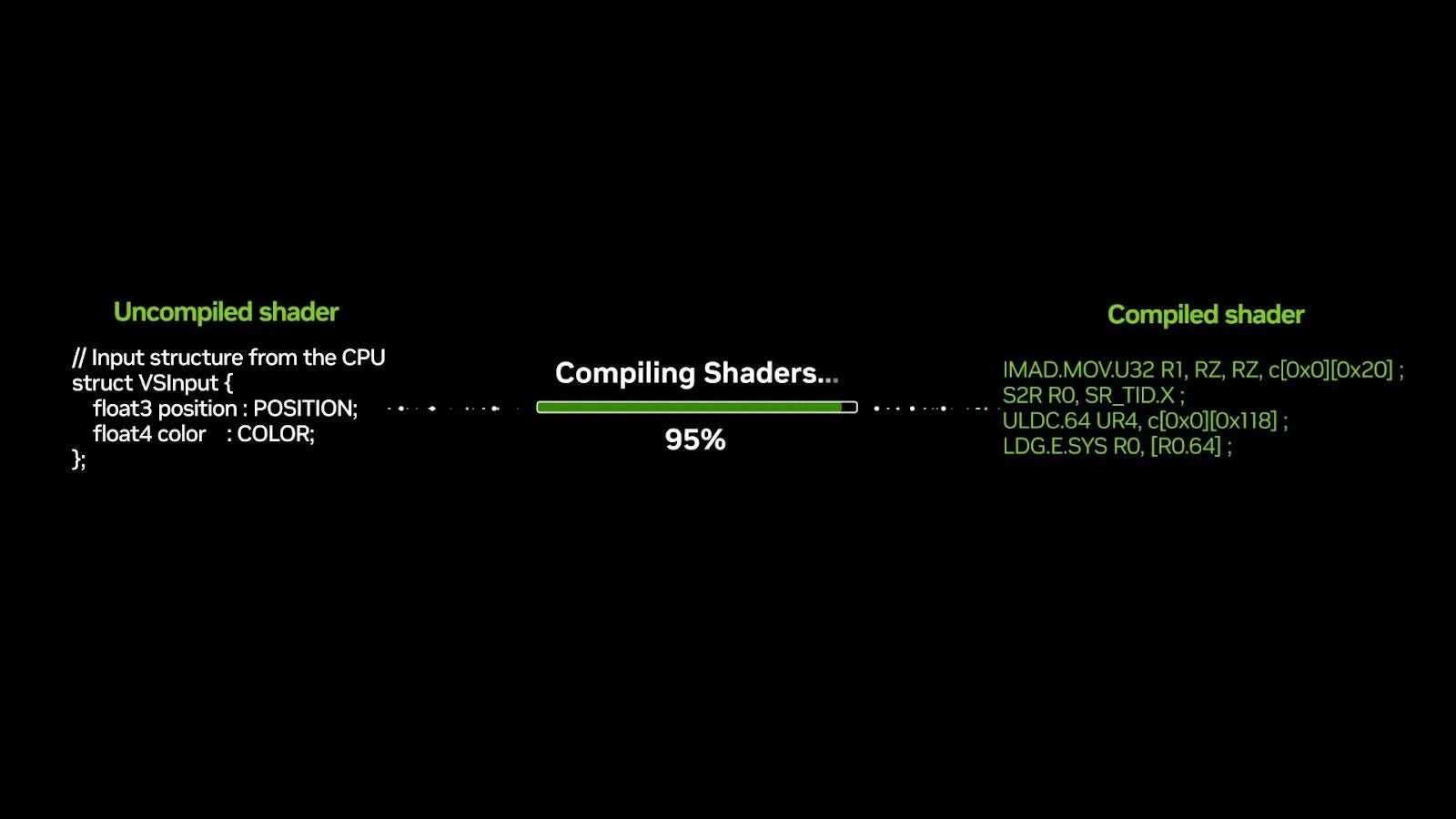
This can be done in a couple of different ways, but each has a downside. First, you can compile the shaders before the game starts. But this leads to that painfully long “compiling shaders” load bar the first time you launch or after a major driver update. The other option is to compile the shaders as they’re actually needed while playing. But this causes something called shader compilation stutter. Basically, when you do certain things in a game that hasn’t been compiled yet, the CPU has to stop and prepare the shader on the fly, which results in a noticeable stutter during gameplay.
The good news is that Microsoft has come up with a solution that actually lets them precompile shaders before you download the game. It’s called Advanced Shader Delivery, or ASD. And it basically uses a database of a game’s precompiled shaders. Then, when you download the game, Microsoft looks at your GPU and driver and sends you the precompiled shaders that match your system. So you won’t have to compile them later.
Now, ASD originally launched on the ROG Xbox Ally handhelds back in 2025, before later expanding to AMD RDNA GPUs earlier this year. But with the new release of Gears Of War: E-Day, Microsoft is releasing it on Intel B-series GPUs, some integrated GPUs and all of Nvidia’s RTX cards. Plus their RTX Spark. Those are coming later this month, but this really is a big deal. Microsoft claims that ASD reduces shader compilation time by approximately 95%.
Unfortunately, there is still an issue here, but it’s not as bad as you might first think. So currently, this is only available through the Xbox PC app, but you can apparently still get the correct shaders pre-installed. Even if you get the game elsewhere. You just have to make sure that the Xbox App is installed first. I’m not sure if it recognizes the game and then downloads it separately or what. But both Microsoft and the game’s developer: The Coalition seem to suggest that it can do this.
At the end of the day, Microsoft actually opened up ASD for other storefronts, so they aren’t keeping it as some proprietary tech. Other stores like Steam can implement it. Here’s to hoping they do soon.
Quick Bytes
Nvidia’s New Windows Laptop Processor Is Here
Microsoft just unveiled its Surface Laptop Ultra, powered by Nvidia’s new RTX Spark platform. With up to 20 CPU cores, 6,144 CUDA cores, and 128GB of unified memory, Nvidia is officially challenging Intel and AMD in premium Windows laptops. Unfortunately, prices start at $2,599.
Zen 6 Is Getting A Third Type Of CPU Core
AMD is preparing Linux support for three different Zen 6 core types: regular performance cores, denser Zen 6c cores, and new low-power cores. AMD is also adjusting scheduling and power management to handle their different capabilities, potentially improving efficiency across its next-generation Ryzen lineup.
DLSS 4.5 Is Now Running On AMD GPUs
Modders have developed D4R, an experimental project that brings Nvidia’s actual DLSS 3, 4, and 4.5 upscaling technology to Radeon GPUs. It even takes advantage of the RX 9000 series’ native FP8 hardware, although compatibility and performance are still very much experimental.
Intel’s Next Desktop CPUs Are Coming
A new leak reveals Intel’s upcoming Core Ultra 9 4970K BFC with 28 cores, including four low-power cores. More importantly, the BFC designation appears to identify models with additional cache designed to compete with AMD’s X3D processors. Finally, some real competition?
That’s all the bytes for this week.
Until next time, may your shaders come precompiled and your Steam Deck 2 arrive before AMD leaks the Steam Deck 3.