


It feels like every week or two, I have to stop and ask myself one question: “How much worse can this really get?”
Unfortunately, the answer looks to be: A LOT!
New reports are warning us that DDR4 in particular is about to get way more expensive. And even parts of the market that remained relatively “cheap” are now getting dragged upward. The AI boom is starting to completely distort the economics of the entire PC industry.
Luckily, there’s a new technology that gives us real hope. Because it isn’t about shifting memory production around from one type to another, or producing more of the same. Instead, it’s actually made to replace it entirely! At least enough of it to actually help ease the burden of outrageous demand.
RAM Prices Have Completely Lost The Plot
Before I get into the actual solution, we have to talk more about the problem. Because there absolutely is one, and it’s getting much worse.
In a new report, Tom’s Hardware went through data from PCPartPicker, comparing prices between August 2025 and August 2026. A 64GB DDR5 5600 kit that averaged around $191 last August is now roughly $1,118. DDR5 6000 went from around $222 to $1,272. That’s an increase of roughly 485% and 473% in one year.
And it gets even worse! When we compare the lowest cost the kits have ever been, one 128GB DDR5 6400 kit currently sits at an unreal $3,399. Yet the lowest price Tom’s Hardware ever tracked for that capacity and speed was $329.
That’s more than 10X the cost!
Even DDR4. The thing everyone was supposed to fall back on, is getting hammered. Depending on capacity and speed, Tom’s Hardware found an increase of between 120% and 177% year over year. Don’t worry though. It only gets much worse!
A recent Morgan Stanley report expects DDR4 prices to jump another 50% in Q3, followed by more than 10% in Q4. As for why, Morgan Stanley claims that manufacturers are moving capacity over to HBM as well as newer DRAM. Luckily, one of those is DDR5, but I highly doubt it will get much of the capacity. Instead, most will likely transition into HBM. And obviously that makes perfect financial sense, but it sucks for basically everyone else.
There’s An Actual Solution!
This is where things get interesting. Sandisk and SK hynix just announced a brand new memory technology called HBF, or High Bandwidth Flash. The “Flash” part is the key. And it’s exactly what you think! High Bandwidth Flash is essentially made from NAND Flash. The same technology that’s used inside your SSD. And it’s being turned into an entirely new class of memory!
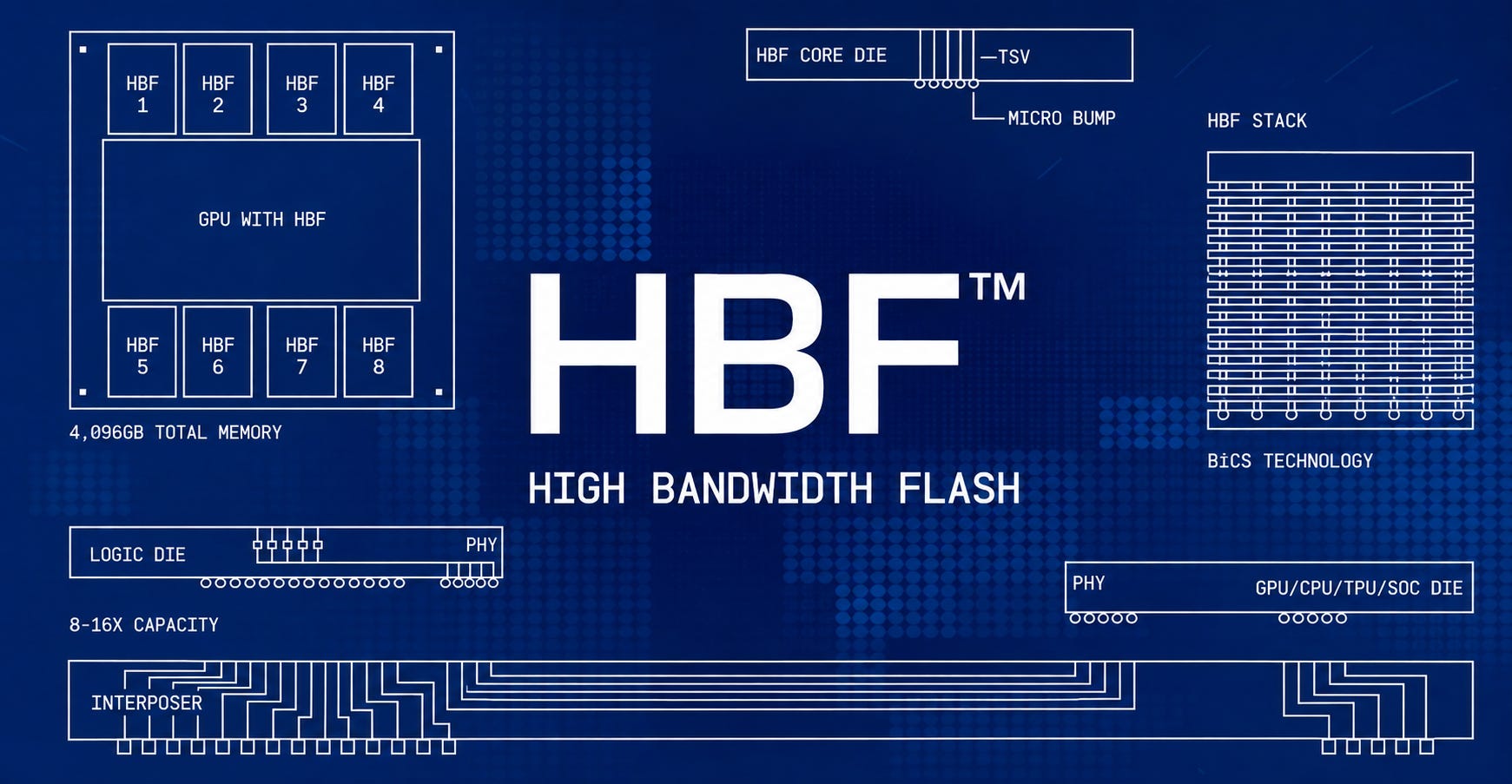
This means that companies can use NAND flash as memory in AI workloads. That could obviously raise prices of SSDs, but because NAND flash is much cheaper and easier to scale into huge densities, it should finally meet a lot more of the demand. Which obviously means lower prices for everyone else.
Now, if you know anything about the technology, you’re probably asking exactly what I did when I first heard about it: how?
For one, HBM4 can reach bandwidths of up to 4.1 TB/s. Compare that to a PCIe Gen 5 SSD, which peaks at around 14-15GB/s. Not to mention endurance and latency. So there’s obviously a huge disparity here. And that’s where this gets interesting. To get around this, they essentially took the same approach as HBM, but applied it to NAND flash. HBF actually stacks a huge number of NAND dies together, and can access them all in parallel. It also uses the industry standard UCIE interconnect. A fast interconnect for die to die communication. This gives HBF bandwidth at up to 3 TB/s.
Sandisk has previously said that HBF could eventually offer roughly 8 to 16 times the capacity of HBM at a similar package cost. Basically, this could make a massive difference when it comes to memory supply.
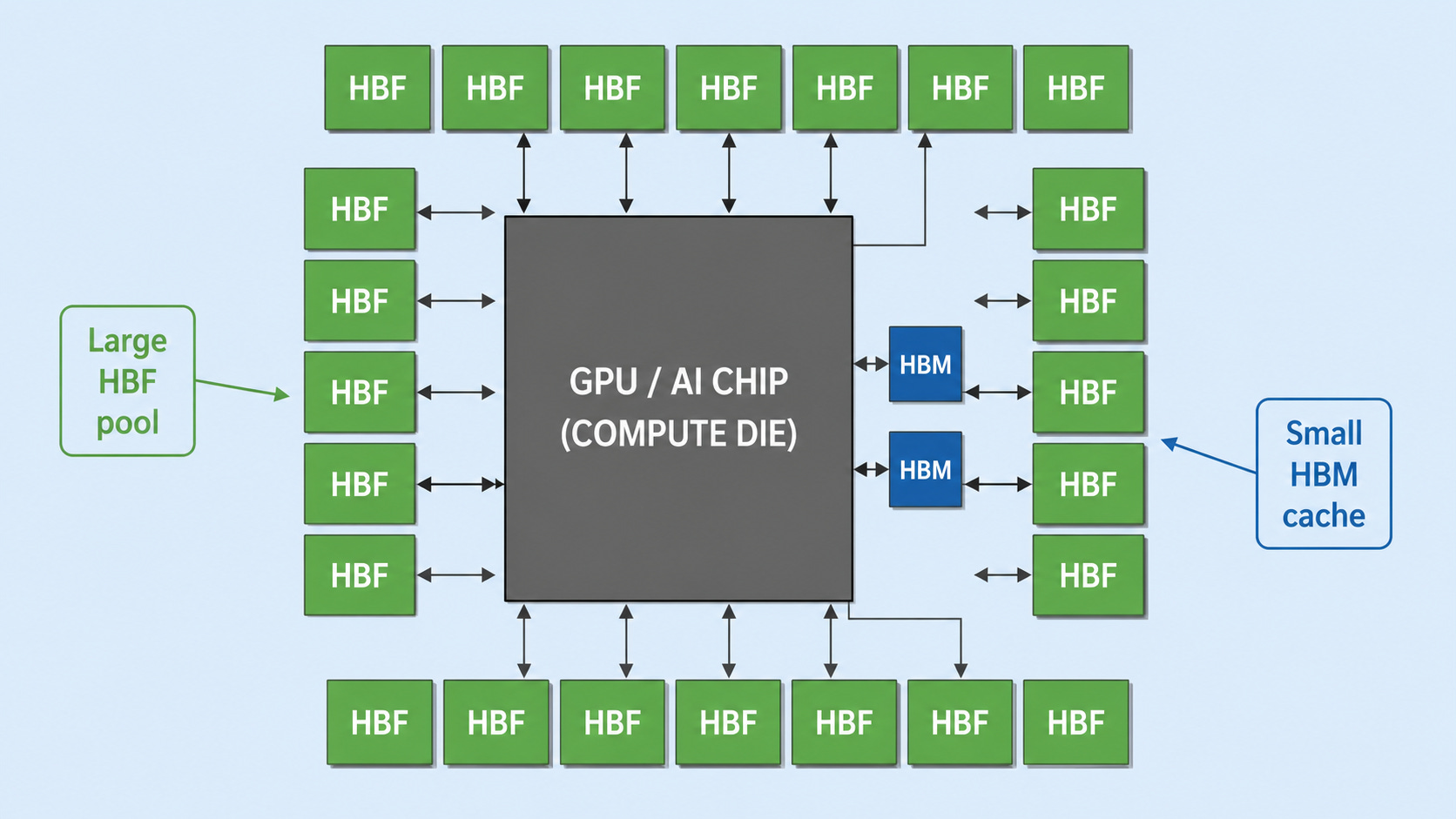
With that said, it does still suffer from high latency, as well as lower write endurance. To manage that, they use HBF for strictly read dominant AI inference workloads. so there’s still a need for at least some HBM for certain tasks. But, given inference is exploding past training, it’s becoming the more dominant workload anyway.
The biggest issue, is really the timing. Because HBF has to be made into the AI accelerator, similar to HBM, companies have to build them around the new memory. The good news is that Sandisk actually claims that HBF equipped AI hardware is targeting early 2027. That may sound a long way off, but remember that companies expect this crisis to take years to end. So 2027 isn’t all that bad. Either way, this look to be a fantastic idea for actually solving a problem that looked unsolvable.
Now Budget GPUs Are In Trouble Too
Unfortunately, there is still bad news to cover. Specifically, in regards to graphics cards.
Because PC Partner, the company behind brands like Zotac and Inno3D, is warning that entry-level GPUs could face even more severe shortages during the second half of 2026. And they specifically warn that those shortages could push average selling prices even higher.
That’s especially concerning because cheap GPUs were basically the last somewhat-normal part of the market. PC Partner’s own brand GPU sales volume has already fallen by 18.4% year over year, while its average selling price actually increased by 10.7%. Meaning they’re selling much fewer cards, for more money. And it doesn’t stop there. According to PC Partner, there are longer lead times for CPUs, system memory, and other components.
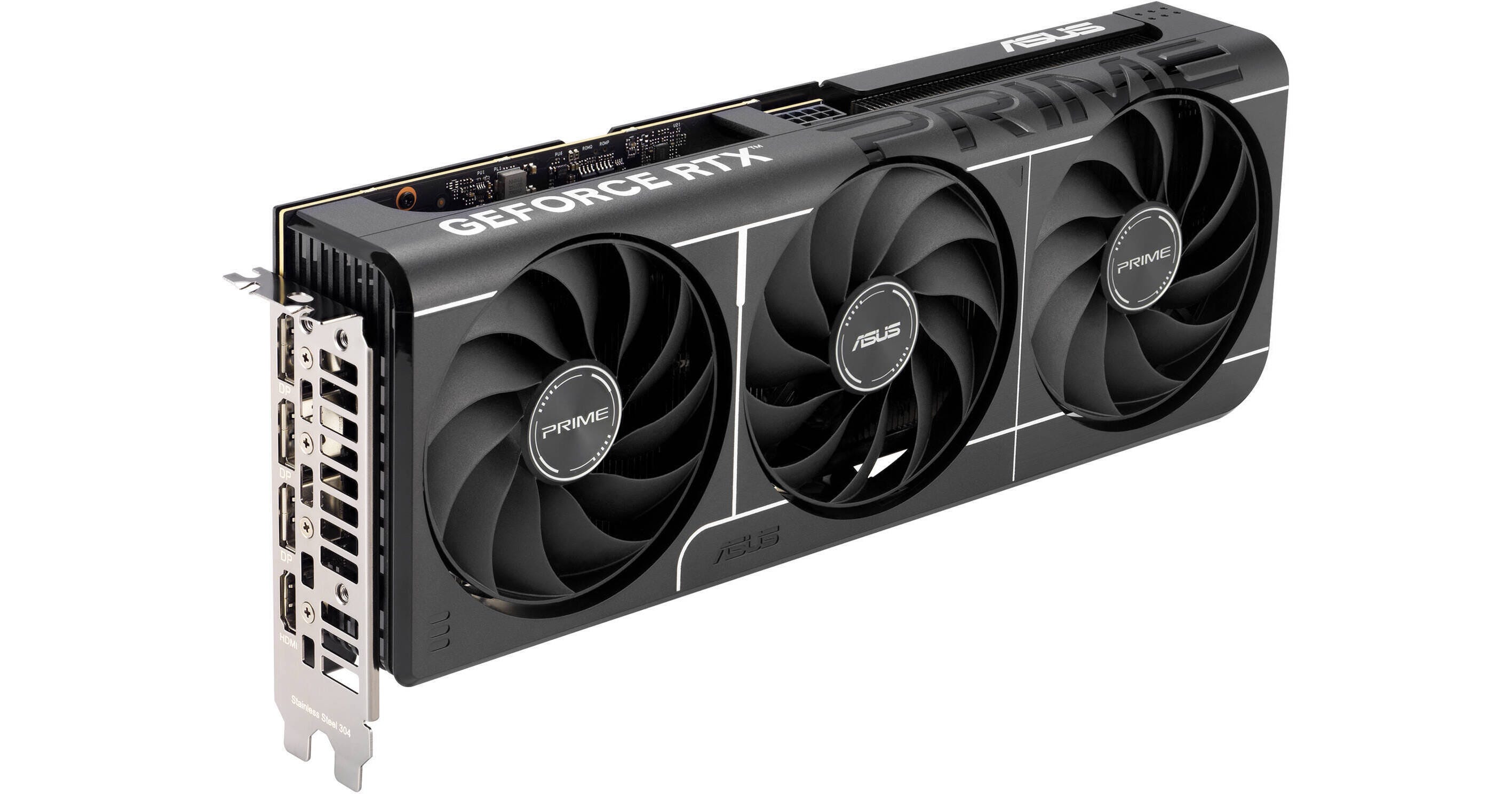
And this actually starts to make sense out of AMD’s new RX 9050 release. As many of you know, the company launched their 8GB card for around $279. Yet the card is terrible at that price! The RX 7600 was more than 20% faster at 1080p and even the RTX 5050 makes this look terrible.
At today’s prices, I don’t think the 9050 makes much sense. But I increasingly wonder whether AMD priced it for the GPU market it expects six months from now instead of the one we have today. Which isn’t exactly comforting, given prices are already terrible.
Intel Actually Wants Desktop Users Again
While the component market catches fire, CPU competition is getting a lot more interesting. Intel VP, Robert Hallock, was recently interviewed by Tom’s Hardware. And he made something pretty clear: Intel wants Nova Lake to make a statement on desktop.
As many of you likely already know, AMD is launching its new Zen 6 architecture in EPYC servers first. That’s pretty odd for them because they typically release to desktop first. And Mr. Hallock was asked about this.
According to him, Intel is debuting their new core on desktop first. More importantly, Intel says it has reorganized its enthusiast desktop business with dedicated people, leadership, product managers and budget, while planning its desktop roadmap all the way through 2030.
But the really big news, is that Mr. Hallock described Nova Lake as potentially one of Intel’s most significant desktop CPU launches ever.
Now, corporate promises don’t mean much, but it does sound like Intel is going all out for next Gen. Arrow Lake didn’t exactly leave Intel with an unlimited supply of goodwill, and Nova Lake still needs to physically exist and beat AMD before anyone starts handing out trophies.
But this is exactly what I want to hear. Intel got punched in the face. Hard. But instead of abandoning desktop PCs for AI accelerators and servers, it’s apparently putting more resources into trying to win enthusiasts back.
Competition works.
Who knew?
Meanwhile AMD Is Already Preparing Zen 7
With that said, AMD isn’t just waiting around for Intel to punch. The company is already working on their next generation Zen 7 architecture. Well, they’re technically always working a couple of generations ahead, given how long a new architecture takes. BUT they’re really making progress.
Because the newest AIDA64 beta already lists preliminary support for AMD Zen 7 server processors.
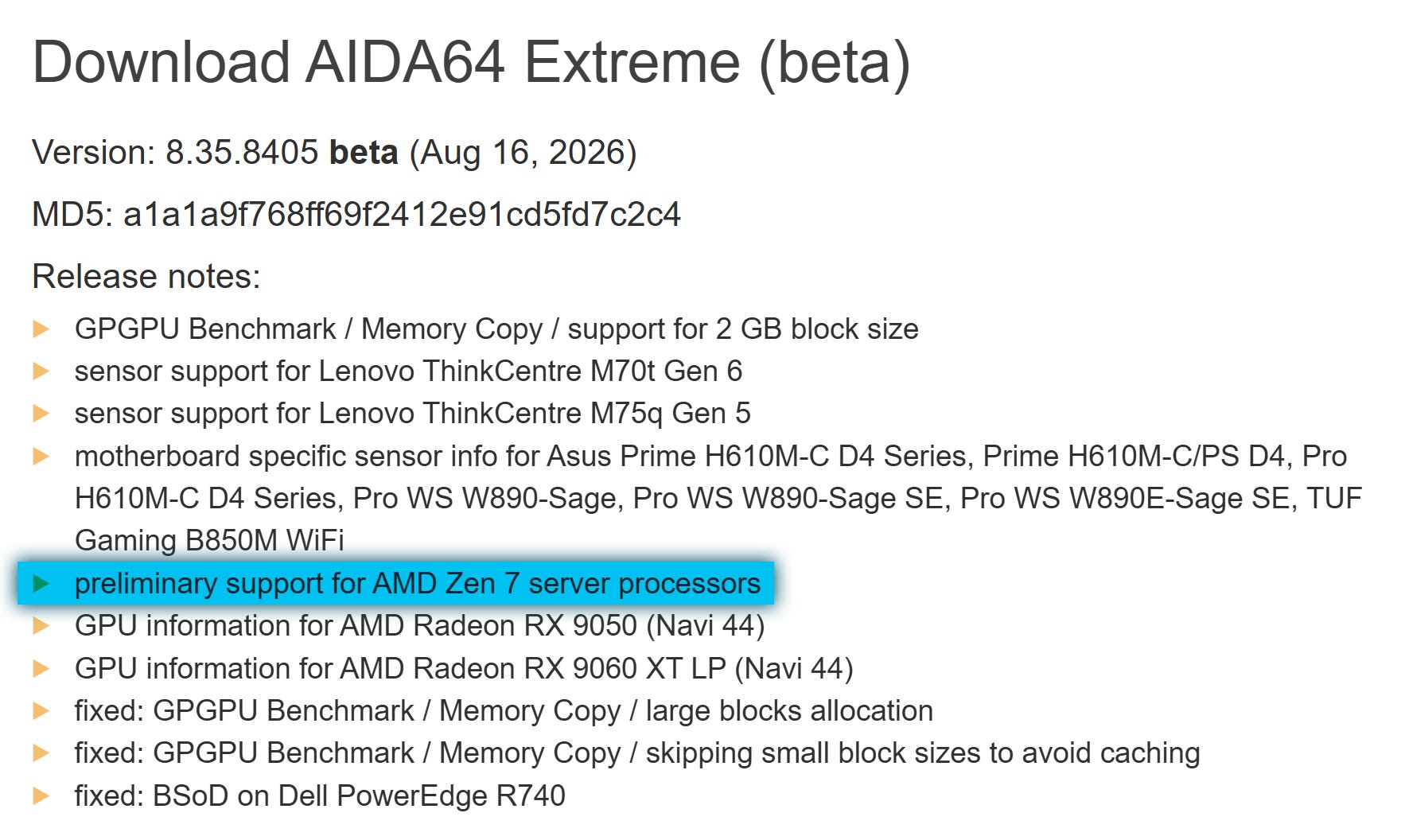
That’s right. Zen 7. We’re still talking about the Zen 6 launch, and AMD’s already long into development of their follow-up. AMD has officially confirmed multiple Zen 7 EPYC families for 2028, although the crazy specifications you’ve probably seen floating around are still rumors.
One leak claims a Zen 7 server design could feature an IPC uplift of around 15–24%, TSMC’s A14 process and chiplets containing up to 48 CPU cores each. And the highest end part comes with up to 8 chiplets for an unreal total of 384 cores! Again, that hasn’t been confirmed, but if it does end up being true, Intel really will have to bring the heat. I mean that’s 50% more cores than the upcoming Zen 6 architecture, which already has more cores than Zen 5 Epyc.
So while Intel may finally be gearing up for a serious comeback, AMD is determined to make sure that comeback is as difficult as humanly possible.
Gotta love competition!
QUICK BYTES
NEVER Trust Cloud Providers
Nine PBS recently lost access to roughly 50TB of archival material spanning 70 years after its contracted cloud storage provider, called Open Source Storage, effectively disappeared. What’s wild is that they were actually using another cloud company, called Iron Mountain to store that data. At first, Iron Mountain agreed to give back the data, but they then backed out, arguing that OSS is technically their customer, and they own the data.
There is an update since I last discussed this in a video though. A judge has cleared the station to recover the data from Iron Mountain’s servers under specific conditions. So this may actually have a happy ending. Still, I think the lesson remains the same: The cloud is somebody else’s computer. Keep another copy.
Noctua Still Refuses RGB
Noctua says it still has no plans to add RGB lighting or screens to its coolers and fans. The company would rather spend those engineering resources improving cooling and noise. And I couldn’t be prouder.
Windows Update Is Breaking Games Again
Microsoft is investigating reports that its latest Windows 11 update can cause some games to freeze, crash or even reboot the PC. Apparently Windows Update decided PC gaming wasn't challenging enough already.
Thieves Are Downgrading Gaming PCs
Two thieves in China reportedly stole RTX 5080 and 5070 GPUs from esports hotel PCs and replaced them with cheaper cards like RTX 3060s so nobody would immediately notice. They were eventually caught after a power outage interrupted one of the swaps.
That’s all the bytes for this week.
Until next time, may your RTX 5080 stay an RTX 5080, your 12V-2x6 stay boring, and your cloud provider continue to exist.
Amen to that!
I find that there is more detail, but for me I prefer the Video.